Why Founder Led AI Consulting Wins

You can usually spot bad AI consulting in the first 15 minutes. Lots of talk about tools. Very little talk about payroll leakage, handoff errors, missed follow-up, or how many hours your team is burning every week on work that should have been automated six months ago. That is exactly why founder led AI consulting stands out. When the person leading the engagement is also the person accountable for the outcome, the conversation gets practical fast.
For service businesses, that matters more than most firms admit. If you run a clinic, legal practice, agency, home service company, real estate team, or compliance operation, you do not need a glossy workshop about the future of AI. You need someone to look at how leads come in, how work gets assigned, where onboarding stalls, how billing slips, and where your staff keeps doing manual tasks that software should be handling. Then you need a clear answer to one question: where is the money?
What founder led AI consulting actually means
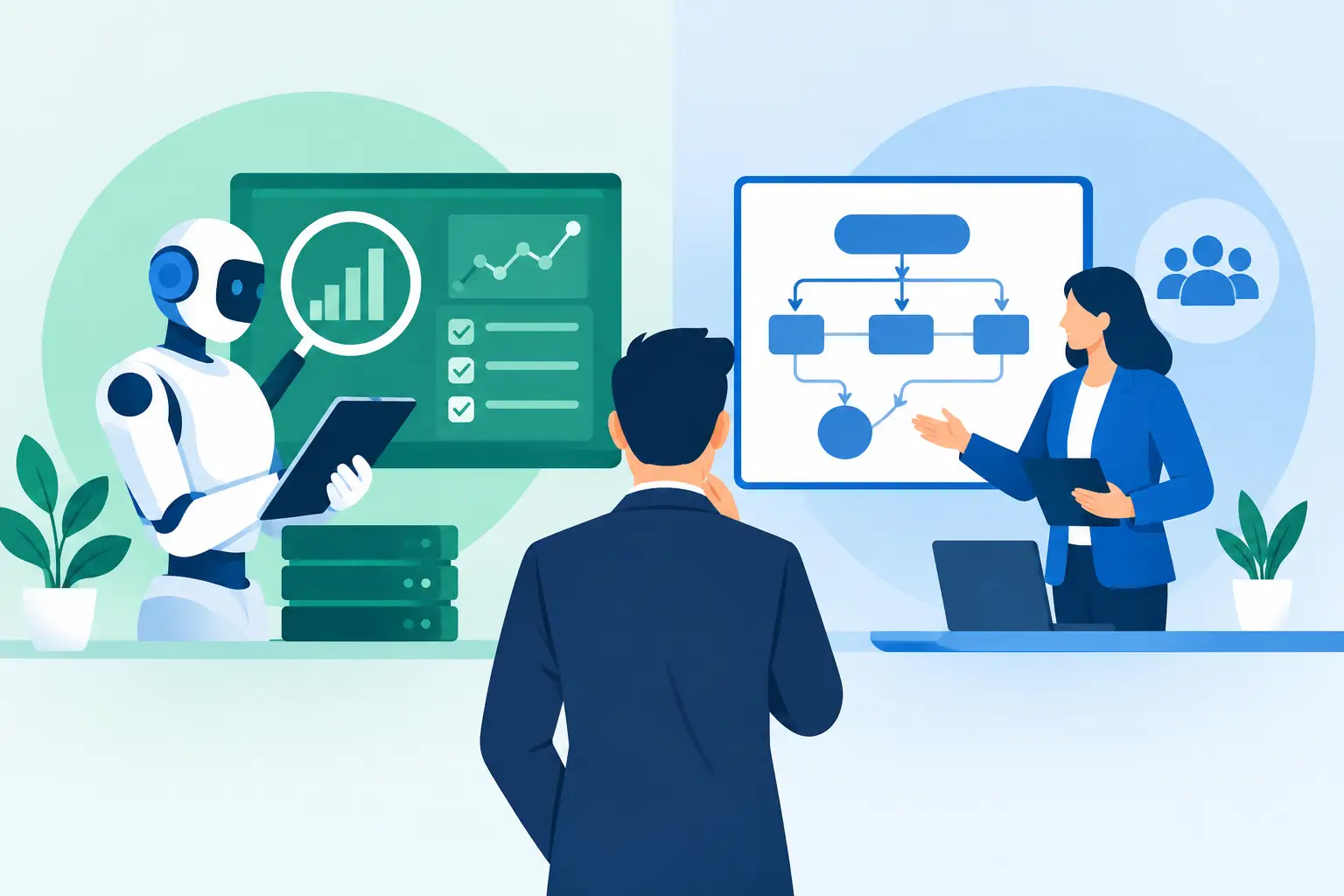
Founder led AI consulting is not just a branding choice. It means the strategist, operator, and decision-maker is in the room from the first call through the recommendations, and often through implementation as well. There is no account manager translating your business to a technical team that has never met you. There is no junior analyst padding a slide deck with generic automation ideas.
That changes the quality of the work. Founders tend to ask harder questions because they have had to solve these problems inside real businesses. They care less about whether a workflow looks impressive on a diagram and more about whether it saves 10 hours a week, cuts admin headcount pressure, or stops leads from slipping through the cracks.
The difference is not philosophical. It is operational. In a founder-led model, decisions happen faster, trade-offs are addressed honestly, and bad ideas die earlier.
Why service businesses benefit most from founder led AI consulting
Service businesses are messy in a very specific way. Revenue depends on people, timing, handoffs, responsiveness, and consistency. A lead form does not just create a lead. It triggers follow-up, qualification, scheduling, reminders, intake, quoting, fulfillment, invoicing, and retention. If one part of that chain is weak, growth gets expensive.
This is where many AI consultants miss the mark. They focus on isolated tasks instead of the full operating system. They might automate email drafts or build a chatbot, but never address the bigger issue that your intake team is re-entering the same client data in three places, your sales team is chasing leads too late, and your billing process depends on someone remembering to send invoices on Friday.
A founder who has worked with service businesses at scale usually sees the chain, not just the task. That matters because the best automation opportunities are often boring on the surface and highly profitable underneath. Reducing no-shows. Speeding up lead response. Standardizing onboarding. Cutting duplicate admin work. Preventing jobs from stalling because a form was never submitted.
None of that sounds flashy. All of it affects margin.
The real advantage is accountability
Most businesses have already been burned once. They bought software that was supposed to save time, hired a freelancer who disappeared after setup, or paid a consultant to hand over a strategy document nobody implemented. So trust is low, and rightly so.
Founder led AI consulting works better because accountability is visible. You know who you are dealing with. You know who made the recommendation. You know who owns the result.
That direct line shortens everything. Questions get answered faster. Edge cases get handled without internal delays. If a workflow recommendation has risk, you hear it plainly instead of getting a polished yes to keep the project moving. That is especially important in businesses where compliance, client experience, or billing errors carry real cost.
There is also a financial discipline that tends to show up more in founder-led work. Good founders know that if they cannot tie an automation to recovered hours, recovered dollars, faster response times, or fewer dropped handoffs, it is not ready to sell. That filters out a lot of expensive nonsense.
What good founder led AI consulting should include
If you are evaluating firms, the standard should be higher than "they understand AI." That is table stakes now. What matters is whether they can diagnose business friction and rank fixes by impact.
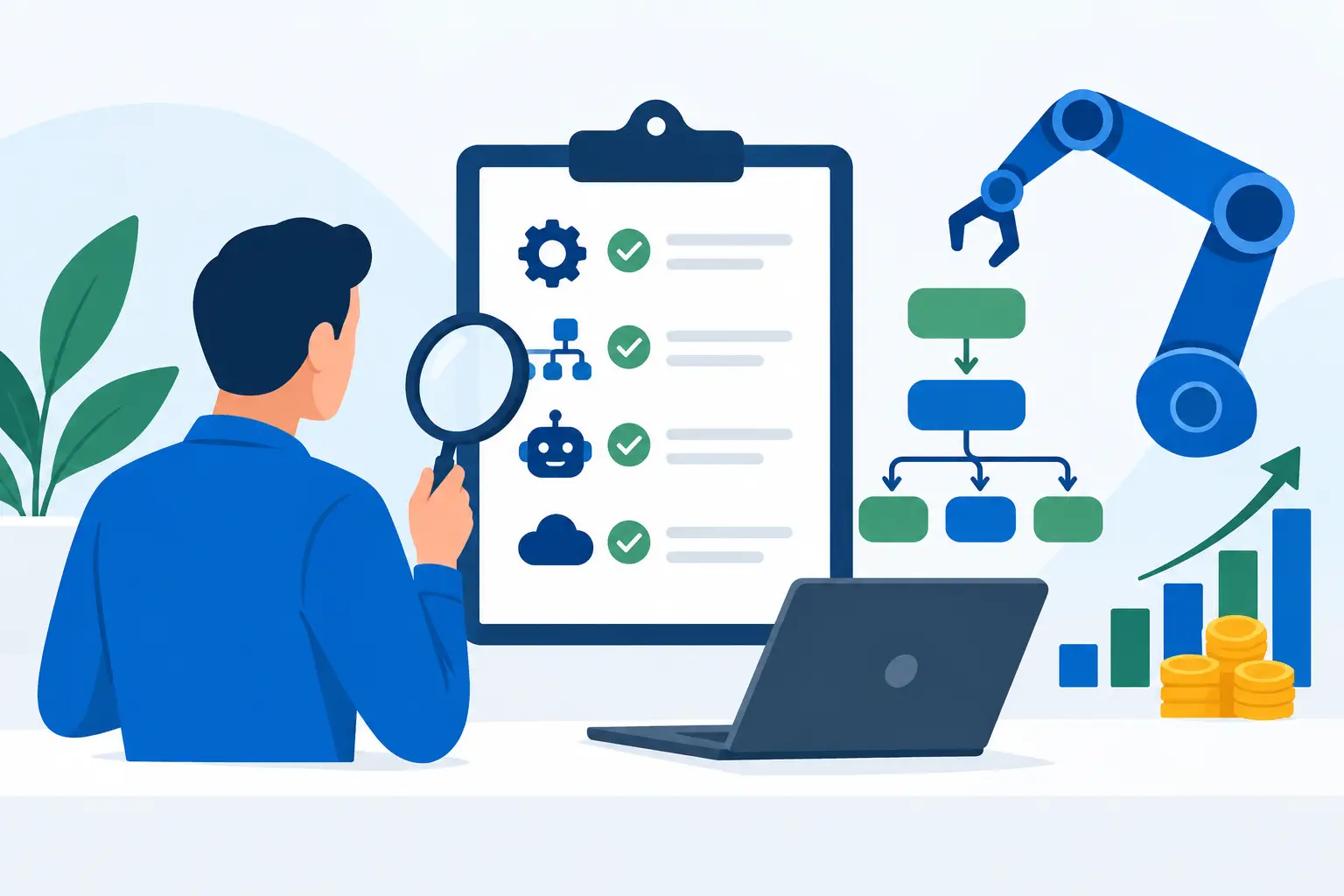
A good engagement should start with workflow mapping across the parts of the business where waste hides: marketing intake, lead qualification, sales follow-up, onboarding, fulfillment, billing, reporting, and internal operations. Not every area needs automation, and that is the point. You are trying to find the bottlenecks where a process change creates measurable gain.
The next step should be quantification. How many labor hours are being spent? How often do delays happen? What does a missed lead cost? How much revenue is being deferred because invoicing lags behind delivery? If a consultant cannot put rough math around the problem, the recommendations will usually drift toward novelty instead of return.
Then comes prioritization. This is where founder-led work often separates itself. Instead of handing over a giant wishlist, the best consultants narrow it down to the few changes with the clearest payoff and shortest path to execution. Sometimes the highest-value move is AI. Sometimes it is process cleanup first, then automation second. It depends on your team, your tools, and how much operational discipline already exists.
Where businesses usually get this wrong
The most common mistake is starting with tools instead of bottlenecks. Business owners hear about an AI scheduler, AI voice agent, AI inbox, AI note taker, AI quoting tool, and AI CRM assistant, and suddenly the stack gets bigger while the operation gets more confusing. More software does not mean more efficiency.
The second mistake is trying to automate broken processes. If lead routing is inconsistent, roles are unclear, or nobody owns follow-up standards, automation can make the mess happen faster. That is not progress.
The third mistake is underestimating adoption. Even smart automations fail if the team does not trust the process or understand where human review still matters. A good consultant will tell you where full automation is appropriate, where approvals should stay in place, and where the real issue is management, not technology.
That is another reason founder led AI consulting tends to perform better. Experienced operators know that implementation is not just technical. It is behavioral.
How to judge whether a founder-led firm is the right fit
Ask simple questions and listen for direct answers.
Who will actually do the diagnostic work? Who maps the workflows? Who decides what gets recommended? Who is available when something breaks? If the founder shows up in sales and disappears after kickoff, it is not founder-led in the way that matters.
Also ask how they measure success. The right answer should sound like operations and finance, not hype. You want to hear about hours reclaimed, dollars recovered, reduction in response time, lower error rates, faster onboarding, stronger close rates, or fewer manual touches per client.
Ask what they do when a process should not be automated yet. This is a revealing question. Weak firms push implementation because that is how they get paid. Strong firms will tell you when the smartest move is to clean up the workflow first, document ownership, and delay automation until it can stick.
Finally, ask how quickly they can get you to a usable plan. Service businesses do not need six months of theory. They need clarity now. A serious operator should be able to identify where the biggest gains are without dragging you through a bloated consulting cycle.
The trade-off most owners should accept
Founder-led work is not always the cheapest option, and it should not be. You are paying for senior judgment, faster decision-making, and fewer layers between diagnosis and action. For businesses with real complexity, that usually saves money overall because fewer mistakes get implemented.
The trade-off is capacity. A founder who stays deeply involved cannot take every project. That is a good sign, not a weakness. It means the model depends on quality and accountability, not volume.
For the right business, that trade is worth it. If your team is losing time to manual admin, leads are getting mishandled, onboarding is inconsistent, or billing is lagging behind delivery, the cost of waiting is usually higher than the cost of getting a clear answer.
At Nils Digital, that is the standard. If we cannot tie the recommendation to recovered hours, recovered dollars, or a faster path to profit, it does not make it into the roadmap.
Want to know exactly where AI could save you 20+ hours a week? Book a free call at nilsdigital.com/automation. The right consultant should leave you with clarity, not more software to babysit.