Service Business AI Roadmap That Pays for Itself

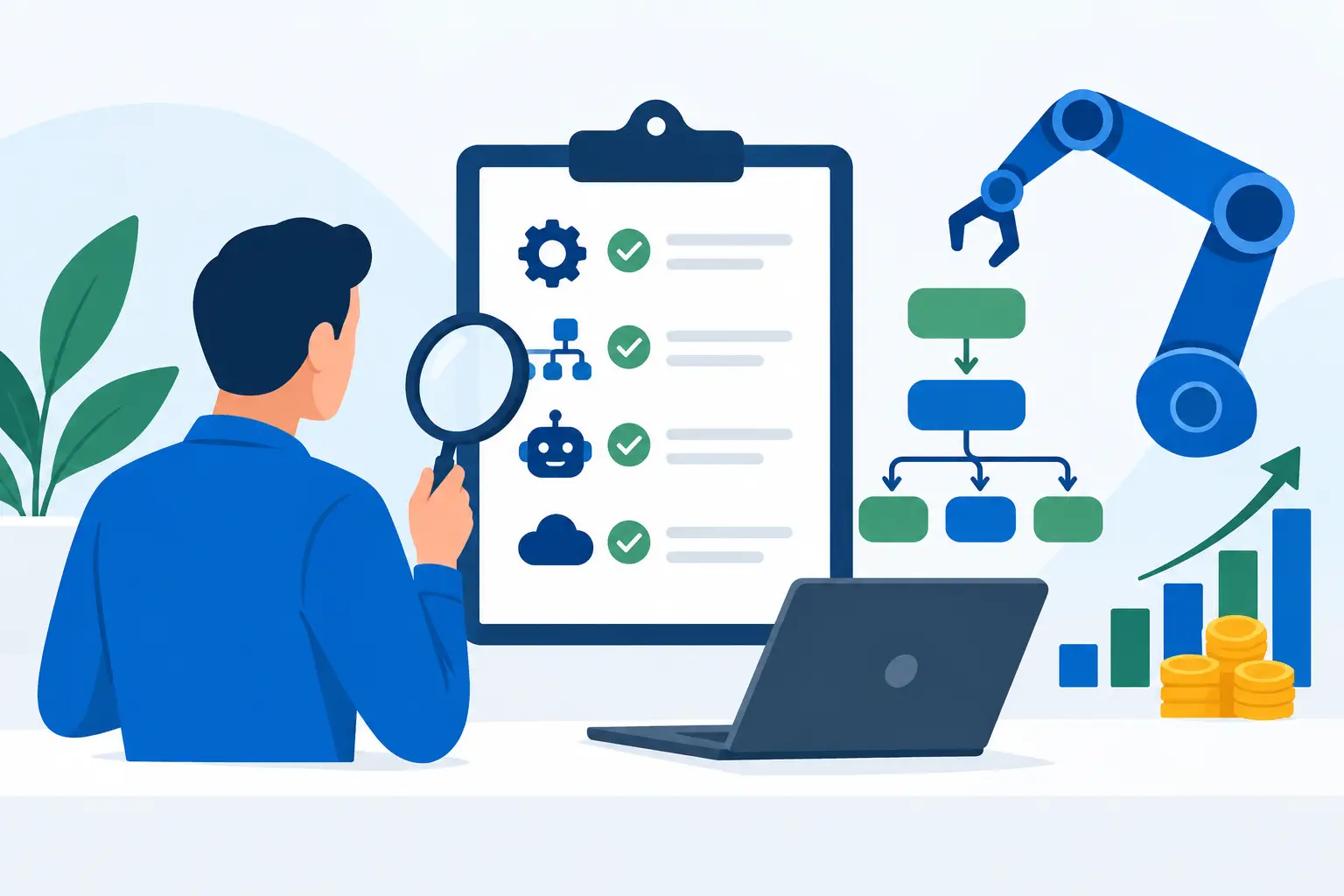
Your team is not short on AI ideas. It is short on time, clean handoffs, and a clear answer to one question: where will automation produce a real return first? A service business AI roadmap answers that question before you buy another tool, give your staff another login, or spend months building a system nobody uses.
For a service company, AI is not the goal. Faster response times, fewer dropped leads, cleaner onboarding, less admin payroll, and faster collections are the goal. If an AI project cannot be tied to recovered hours, recovered dollars, or additional capacity, it belongs at the bottom of the list.
Why Most AI Projects Stall in Service Businesses
The usual failure starts with a tool, not a workflow. An owner sees a demo for an AI chatbot, note taker, proposal writer, or agent. The team tries it for two weeks. A few people use it, nobody owns the process, and the original bottleneck remains exactly where it was.
That is not because the technology failed. The business skipped diagnosis.
Service companies run on chains of handoffs: a lead calls, someone follows up, an appointment gets booked, information is collected, work is assigned, the client receives updates, an invoice goes out, and payment is chased. A delay or error at any point creates a cost. Sometimes it is obvious, like a coordinator spending three hours a day copying information between systems. Sometimes it is hidden, like leads that wait until the next morning for a reply and quietly hire someone else.
A useful roadmap finds the expensive breaks in that chain. It does not start by asking, “What can AI do?” It starts by asking, “Where are we paying people to repeat work, and where is poor follow-through costing us revenue?”
Build the Roadmap Around Financial Impact
The best opportunities are rarely the flashiest. They are the workflows with enough volume, repetition, and clear downside that an improvement shows up in the numbers.
Start by mapping the full customer and operational journey. This means marketing intake, sales follow-up, estimates, onboarding, fulfillment, client communication, billing, collections, internal reporting, and management approvals. For each step, identify who does the work, what software they use, how long it takes, what triggers it, and what happens when it is late or wrong.
Then attach a cost to the problem. If two project coordinators spend 10 combined hours each week assembling status updates, multiply those hours by loaded payroll cost. If your office misses 15 after-hours calls a month and only three would have become customers, estimate the gross profit on those jobs. If incomplete intake forms force staff to chase clients for documents, calculate the delay and the labor.
This is where weak AI advice falls apart. “Automate your operations” is not a plan. “Automate new-client intake because the team spends 18 hours a week chasing missing fields, costing roughly $1,350 a month before rework” is a business case.
Score every opportunity before you build
A practical service business AI roadmap ranks opportunities against four factors: financial impact, implementation effort, workflow reliability, and risk.
High-impact, low-effort fixes should go first. For example, an AI-assisted intake workflow that extracts information from forms, checks for missing details, creates the client record, and alerts the right team member can often be deployed faster than a complex custom system. It reduces response time and admin labor without changing how the core service is delivered.
A high-impact project with heavy implementation requirements may still be worth doing, but it belongs in a later phase. Think of a custom dispatch optimizer, a knowledge assistant connected to years of internal files, or a system that changes how regulated client data is handled. The potential return can be substantial, but the data, approvals, testing, and training need to be real parts of the plan.
Do not confuse “easy to demo” with “easy to operate.” The right automation has an owner, documented exceptions, and a fallback when information is incomplete or the system cannot make a safe decision.
The Four Areas Worth Examining First
Every business is different, but four areas repeatedly produce measurable wins for established service companies.
1. Lead response and qualification
Speed matters most when a prospect is actively looking for help. An automated system can acknowledge an inquiry immediately, collect the right qualification details, route the lead to the appropriate person, and create follow-up tasks when a conversation stops. AI can help summarize calls, draft personalized replies, and identify common questions before a human gets involved.
The trade-off is brand control. For high-ticket or sensitive services, AI should not pretend to be a senior advisor or make promises about scope, pricing, outcomes, or compliance. Use it to accelerate the first response and prepare your team, not replace judgment where judgment closes the deal.
2. Intake and onboarding
Onboarding is where many service businesses create unnecessary work for themselves. Clients submit information in multiple formats. Staff copy it into a CRM, project platform, billing system, and shared folders. Missing details trigger email back-and-forth. The work starts late because nobody knows whether the file is actually complete.
A well-designed workflow collects information once, validates it, extracts key details from documents, creates the required records, and flags exceptions for review. The gain is more than time saved. Your team starts work with better information, which reduces downstream mistakes that are harder and more expensive to fix.
3. Fulfillment and client communication
Teams lose hours writing routine status updates, meeting notes, task summaries, and follow-up emails. AI can turn structured project activity into a draft update, summarize calls into assigned tasks, and surface stalled work before a client has to ask for an answer.
The key word is draft. Client-facing communication still needs a person accountable for accuracy, especially in healthcare, legal, financial, compliance, or other high-consequence work. Automation should remove the blank page and the chasing. It should not send unreviewed nonsense to a client because someone wanted to save five minutes.
4. Billing, collections, and reporting
Revenue leakage is often hiding in plain sight. Invoices are delayed because completed work is not communicated to billing. Payment reminders go out inconsistently. Management reporting takes days because someone is combining spreadsheets manually.
Automations can trigger billing events when work reaches a defined milestone, flag overdue balances based on rules, and create a current view of workload, capacity, collections, and performance. This is not glamorous, but it is often where an owner feels the impact first: less time spent chasing facts and fewer dollars left sitting in accounts receivable.
Turn the Plan Into a 14-Day Execution Sequence
A roadmap should tell your team what happens next, not leave them with a pile of possibilities. The first 14 days should focus on one or two contained workflows with clear baseline measurements.
In the first few days, confirm the workflow map, select the owner, document every trigger and exception, and establish the baseline. Measure current turnaround time, staff hours, error rate, conversion rate, or collection lag. Without a baseline, every future claim of success is guesswork.
Next, build and test the smallest version that solves the problem. Use real but controlled cases. Intentionally test missing fields, duplicate records, unusual requests, and system failures. Service operations are messy. A workflow that only works when every client behaves perfectly is not ready for production.
In the final days, train the people who will run the process, define escalation rules, and review results against the baseline. If the numbers improve, expand carefully. If they do not, fix the workflow or stop. Good operators do not keep funding an automation because it sounded smart in a meeting.
What a Roadmap Should Deliver
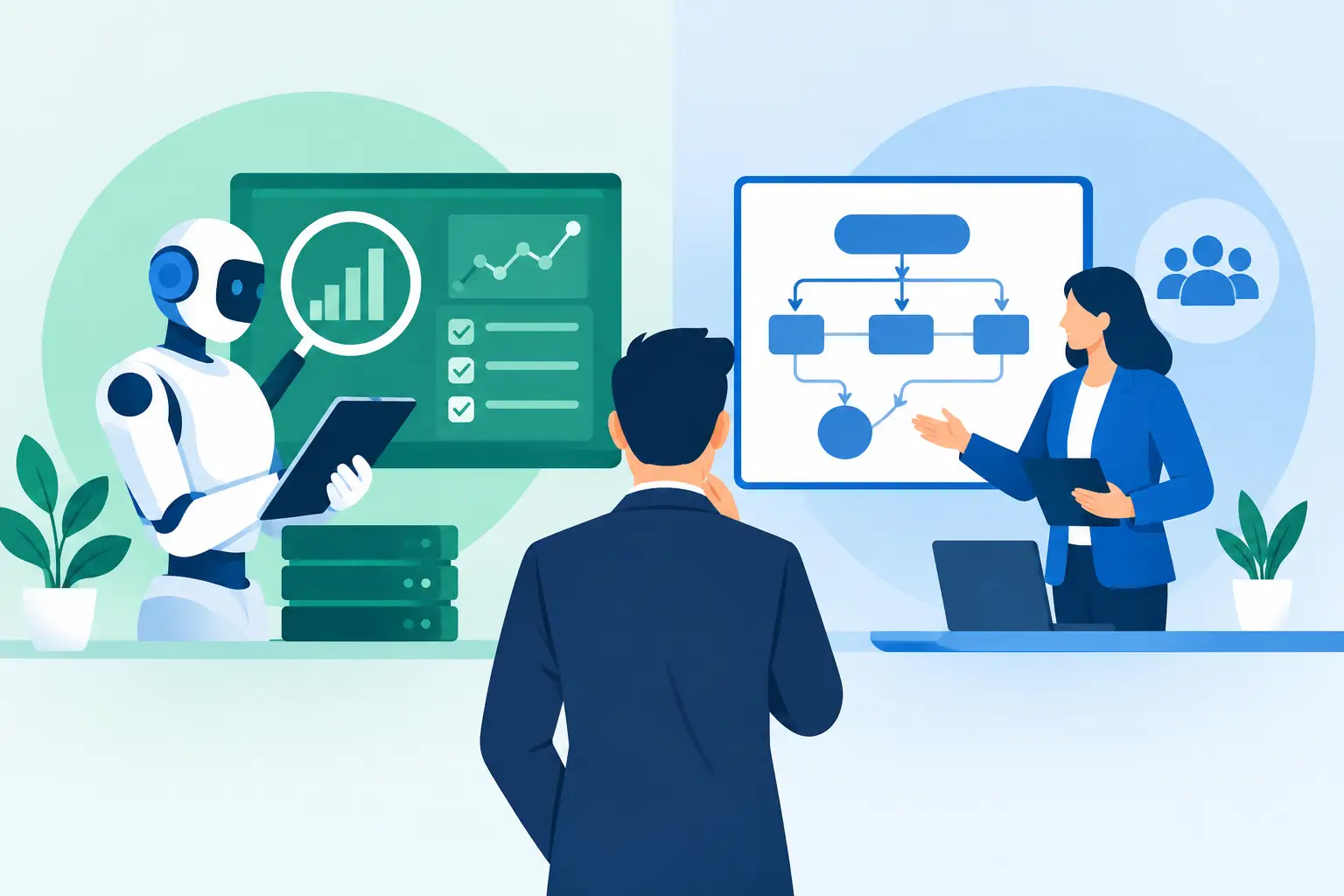
A usable roadmap is not a generic list of recommended software. It should show the current workflow, the failure points, the estimated cost of those failures, the proposed fix, required systems, implementation complexity, owner, and expected return timeline.
It should also be honest about what should stay human. Empathy, negotiation, expert judgment, relationship repair, and nuanced client advice are often where a service business earns its premium. AI should give those people more time to do their best work. It should not turn a trusted service into a cold, automated maze.
At Nils Digital, that is the standard: map the work, put math behind the waste, rank the fixes by financial impact, and give the owner a plan they can use. No vague transformation language. No software recommendation without a reason.
The next useful step is not choosing an AI platform. It is finding the one workflow that is costing you enough each month to justify fixing it now. Want to know exactly where AI could save you 20+ hours a week? Book a founder-led automation call with Nils Digital.