Local Service Google Ads That Produce Real Leads

A homeowner with a burst pipe, a parent looking for a pediatric dentist, or a business owner facing a compliance problem is not browsing for entertainment. They are looking for someone to call. That is why local service Google Ads can be one of the fastest ways to create revenue for a service business. It can also become an expensive lesson if you pay for clicks your team cannot convert.
The difference is not a secret bidding trick. It is the system behind the ad: the search terms you buy, the service areas you can actually serve profitably, the page a prospect lands on, and the speed at which someone answers the phone. If one of those pieces is weak, more ad spend just makes the weakness more expensive.
What Local Service Google Ads Are Actually For
Google Ads works best when it captures existing demand. A prospect types "emergency plumber near me," "commercial cleaning company Chicago," or "estate planning attorney consultation" because they already have a problem and are actively evaluating providers. Your job is to appear at that moment with a clear reason to contact you.
That makes Google very different from awareness advertising. You are not trying to convince everyone in a 20-mile radius to care about your business. You are paying to reach the smaller group already searching for the outcome you deliver.
For many established local businesses, this creates a straightforward financial equation. If an average new client is worth $2,500 in gross profit and you can reliably acquire one for $500, there is room to scale. If the same client is worth $300 and costs $450 to acquire, no amount of reporting will make the campaign healthy.
Before launching, know three numbers: the gross profit from a new client, the close rate on qualified leads, and the maximum cost per qualified lead you can afford. If you cannot calculate those, you are not ready to set a budget. You are guessing with your cash.
Start With the Services That Can Carry Ad Spend
Do not advertise every service just because it appears on your website. Start with the work that has enough margin, capacity, and demand to justify a paid acquisition cost.
A restoration company may make emergency water mitigation its first campaign because urgency is high and job values are substantial. A dental practice may prioritize implants or Invisalign over routine cleanings. An agency may advertise a high-value strategy engagement rather than broad "marketing services." The right offer is usually specific, commercially meaningful, and easy for a prospect to understand in a few seconds.
This is where many campaigns go wrong. The ads generate leads, but they generate the wrong leads: price shoppers, out-of-area callers, people looking for a service you no longer offer, or small jobs your team does not want. A lead count can look impressive while the calendar fills with conversations that never had a chance to become profitable work.
Set up separate campaigns or tightly controlled ad groups around your priority services. That lets you see which service creates booked appointments, closed revenue, and repeatable return. It also stops one high-volume, low-value keyword from swallowing the budget.
Choose geography based on economics, not ego
A wider service area is not automatically better. For a mobile business, each extra mile can add drive time, fuel cost, scheduling complexity, and missed opportunities closer to home. For a clinic or office, the practical radius depends on the value and urgency of the appointment.
Start where you have a proven ability to deliver quickly and profitably. Then expand by ZIP code, neighborhood, or suburb when the numbers support it. If leads from one area close at half the rate of another, treat that as an operational fact, not a mystery to explain away.
Build Ads Around Search Intent
The person searching "HVAC repair near me" is not in the same buying stage as the person searching "how long does an AC unit last." Both phrases may relate to HVAC, but only one is likely to create an immediate service call.
Prioritize high-intent searches that combine a service with a location, urgency, price signal, or clear problem. Terms such as "roof repair contractor," "same-day electrician," and "business attorney consultation" usually show stronger commercial intent than broad informational searches.
Your ad copy should match the search without making promises you cannot keep. State the service, the area, and one reason to choose you. That could be rapid response, specialized experience, transparent scheduling, financing availability, or a defined guarantee. Avoid empty claims like "best service" unless you can substantiate them.
Just as important are negative keywords. These tell Google when not to show your ad. A commercial cleaning company may exclude searches for jobs, salaries, DIY advice, products, or residential cleaning. An attorney may exclude free forms, legal definitions, and irrelevant practice areas. This work is not glamorous, but it protects the budget from predictable waste.
The Click Is Not the Lead
Sending paid traffic to a generic homepage is one of the most common mistakes in local advertising. Your homepage has to speak to everyone: existing clients, job applicants, referral partners, and people exploring multiple services. A paid-search prospect needs a shorter path.
A useful landing page answers four questions immediately: What do you do? Who is it for? Where do you provide it? What should the prospect do next? The primary call to action should be obvious, whether that is calling now, requesting an estimate, or booking a consultation.
For service businesses, trust is often the deciding factor. Show real reviews, licensing or certification where relevant, proof of experience, service-area clarity, and a concise explanation of what happens after someone reaches out. Do not make prospects hunt for a phone number or complete a twelve-field form just to ask a question.
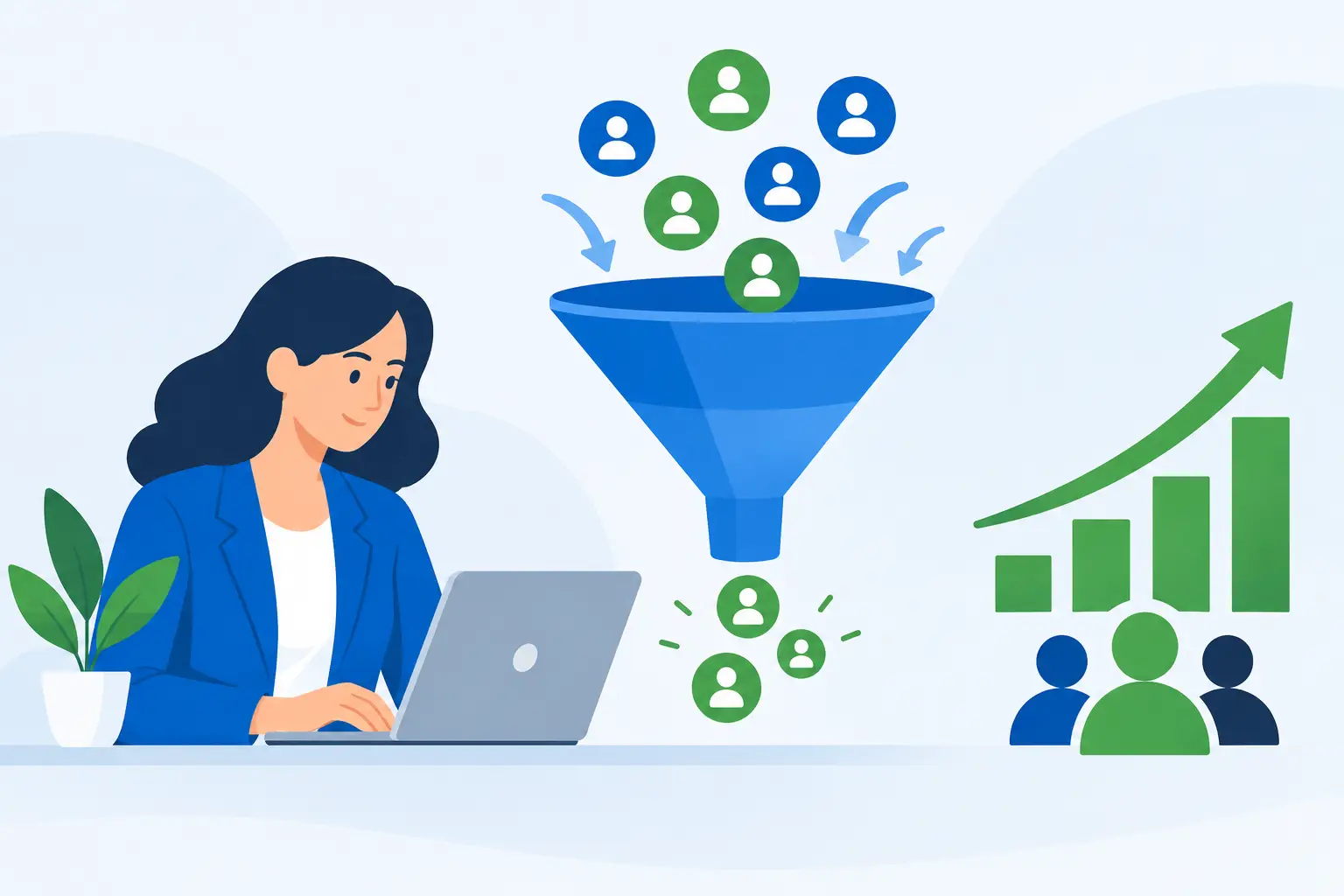
At Nils Digital, the target is not traffic for traffic's sake. A high-converting website funnel should turn roughly 10% to 20% of qualified visitors into leads, depending on the service, offer, and market. If a page converts at 2%, you may have an advertising problem, a page problem, or an offer problem. Usually, it is worth diagnosing all three before raising the budget.
Speed to Lead Decides Whether Ads Pay Back
A lead that waits until tomorrow is often a lead that hired someone else today. This is especially true for urgent home services, healthcare appointments, legal matters, and business-to-business work where the prospect has already contacted multiple providers.
Answer calls during advertised hours. Return missed calls quickly. Send immediate confirmation after a form submission, then make a real follow-up attempt while the prospect still remembers why they searched. Automation can help with confirmations and reminders, but it cannot replace a competent person who can answer questions, establish trust, and move the conversation toward an appointment.
Track more than form fills. A useful campaign report connects the full chain: ad spend, calls and form leads, qualified leads, appointments booked, sales closed, and revenue collected. Without that chain, an agency can claim success based on cheap leads while your sales team sees no improvement in the bank account.
Fix the bottleneck before buying more clicks
Suppose you spend $3,000 and produce 30 leads. If only 12 are qualified and your team books four appointments, the next question is not automatically whether Google needs more budget. It is where the drop-off occurred.
Maybe the ads are too broad. Maybe your intake team cannot answer after 5 p.m. Maybe your form attracts the wrong request type. Maybe pricing is unclear until late in the sales process. Each issue requires a different fix. Treating every problem as an ad problem is how businesses spend more while learning nothing.
How to Judge Performance Without Being Misled
Cost per click matters, but it is an early indicator, not the finish line. A $20 click that produces profitable clients is better than a $4 click that produces junk inquiries. Cost per lead matters too, but only if the leads meet your definition of qualified.
The number that matters most is customer acquisition cost relative to gross profit and lifetime value. For recurring services, a higher upfront acquisition cost may make sense if retention is strong. For one-time, low-margin jobs, the acceptable cost is much tighter. There is no universal "good" cost per lead because the economics of each business are different.
Give a new campaign enough data to make decisions, but do not confuse patience with passivity. Search-term cleanup, geographic adjustments, call reviews, and landing-page improvements should happen continuously. The campaign should get sharper as real lead data comes in.
Google Ads is not magic. It is a measurable client acquisition channel when the offer, operations, and follow-up are ready to support it. If the math works, it deserves serious attention. If the math does not work, fix the system before you feed it more budget.
Ready to build a client acquisition system that can be measured in booked jobs and revenue, not vanity metrics? Book a free strategy call with Nils Digital's founder-led team.