In House vs Outsourced Automation
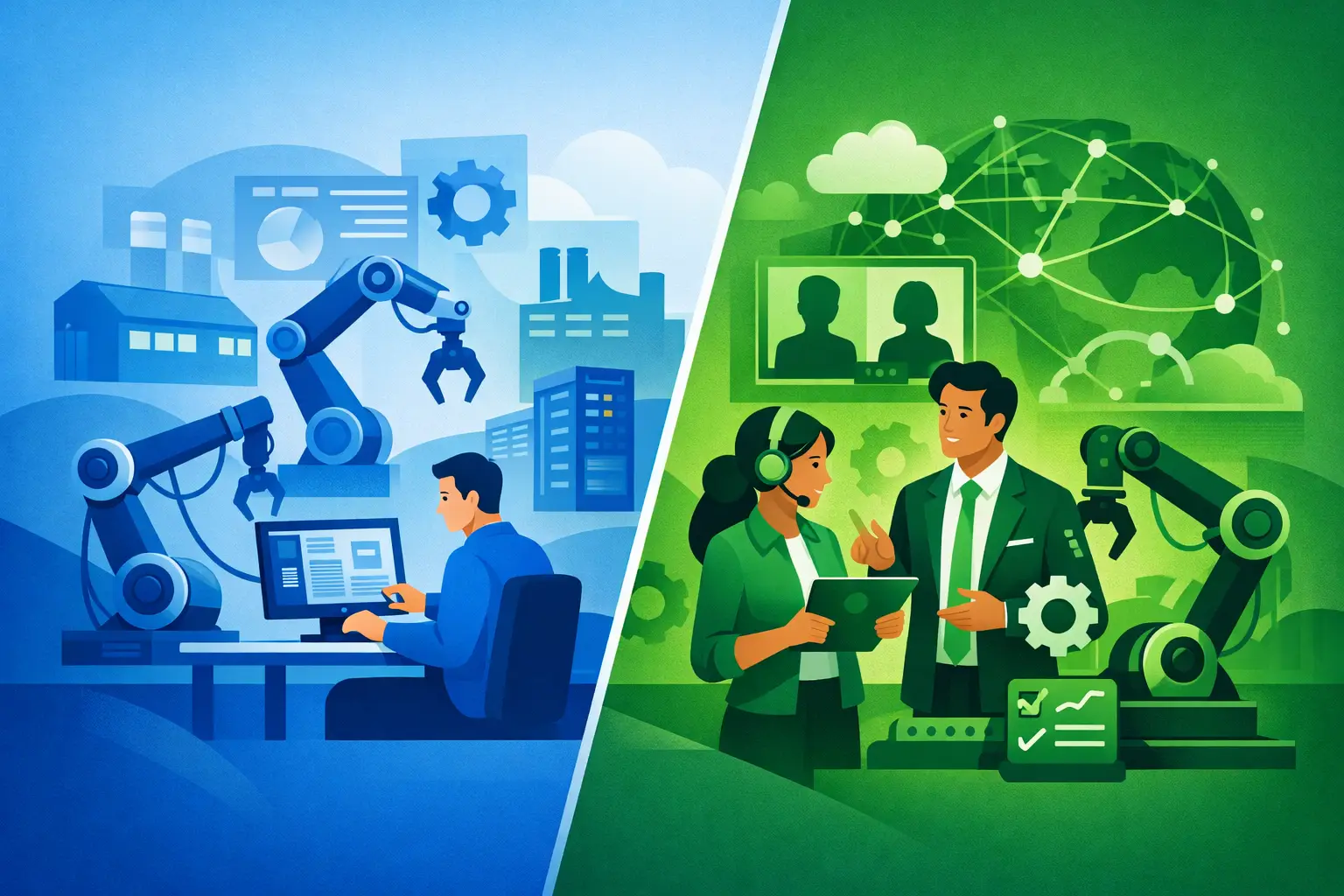
A lot of automation projects fail before the first workflow goes live. Not because the software was wrong, but because the business picked the wrong build model. That is the real issue in the in house vs outsourced automation decision. You are not just choosing who wires up tools. You are choosing speed, accountability, cost structure, and how much operational risk you are willing to carry.
For a service business doing real revenue, this choice matters fast. A bad automation setup does not just waste tech spend. It creates missed handoffs, delayed follow-up, payroll drag, billing errors, and frustrated staff. The right setup can recover hours every week. The wrong one can bury your team in one more system nobody trusts.
In house vs outsourced automation: what you are actually deciding
On paper, the choice looks simple. Build automation internally, or hire an outside expert to do it. In practice, the decision is more specific than that.
If you build in house, you are betting that your team has enough process clarity, technical skill, time, and management discipline to design and maintain automations without slowing down the rest of the business. If you outsource, you are betting that an external partner can understand your workflows quickly, prioritize the highest-value fixes, and implement without creating dependency or confusion.
That means the real comparison is not employee cost versus agency cost. It is internal bandwidth versus execution speed. It is learning curve versus proven pattern recognition. It is control versus leverage.
When in-house automation makes sense
There are cases where building internally is the right call. If your company already has a strong operations leader, documented workflows, and someone technical enough to manage tools across your CRM, scheduling, billing, onboarding, and reporting stack, in-house can work well.
This is especially true when automation needs are constant and highly customized. If your business is changing workflows every week, handling sensitive internal logic, or supporting a large volume of edge cases, having direct internal ownership can reduce friction. Your team already knows the nuances. They sit close to the day-to-day work. They can spot breakdowns quickly.
In-house can also make financial sense when the workload is large enough to justify a dedicated operator. But that last part matters. Many owners assume they need an in-house automation hire when they really need 30 to 60 hours of smart system design, cleanup, and implementation. That is not a full-time role. That is a targeted project.
The hidden problem with in-house is that most businesses do not actually have an in-house automation team. They have a good operations person, a marketing manager who is "pretty techy," or an admin who figured out some Zapier recipes. That can get you started. It usually does not get you a reliable automation system tied to profit.
The real cost of building automation in house
Founders often underestimate internal cost because payroll feels familiar. A salary is obvious. The drag it creates is not.
If a $70,000 per year employee spends three months researching tools, testing workflows, fixing bad data, and chasing other staff for process decisions, your cost is not just salary. It is the opportunity cost of what that person should have been doing instead. It is the management time spent supervising the project. It is the delay in getting the automation live. It is the revenue leakage that continues while everyone "figures it out."
Then there is the quality issue. Internal teams often automate broken processes too early. They wire together forms, pipelines, email steps, and task triggers before standardizing how work should move. That creates faster chaos, not better operations.
This is where many automation projects go sideways. The business thinks it is buying efficiency, but it is really digitizing inconsistency.
When outsourced automation is the better move
Outsourced automation makes the most sense when speed, expertise, and financial clarity matter more than keeping every task internal. That is the case for a lot of service businesses between roughly $500,000 and $10 million in revenue. They have enough complexity for automation to matter, but not enough internal technical depth to build it cleanly without distraction.
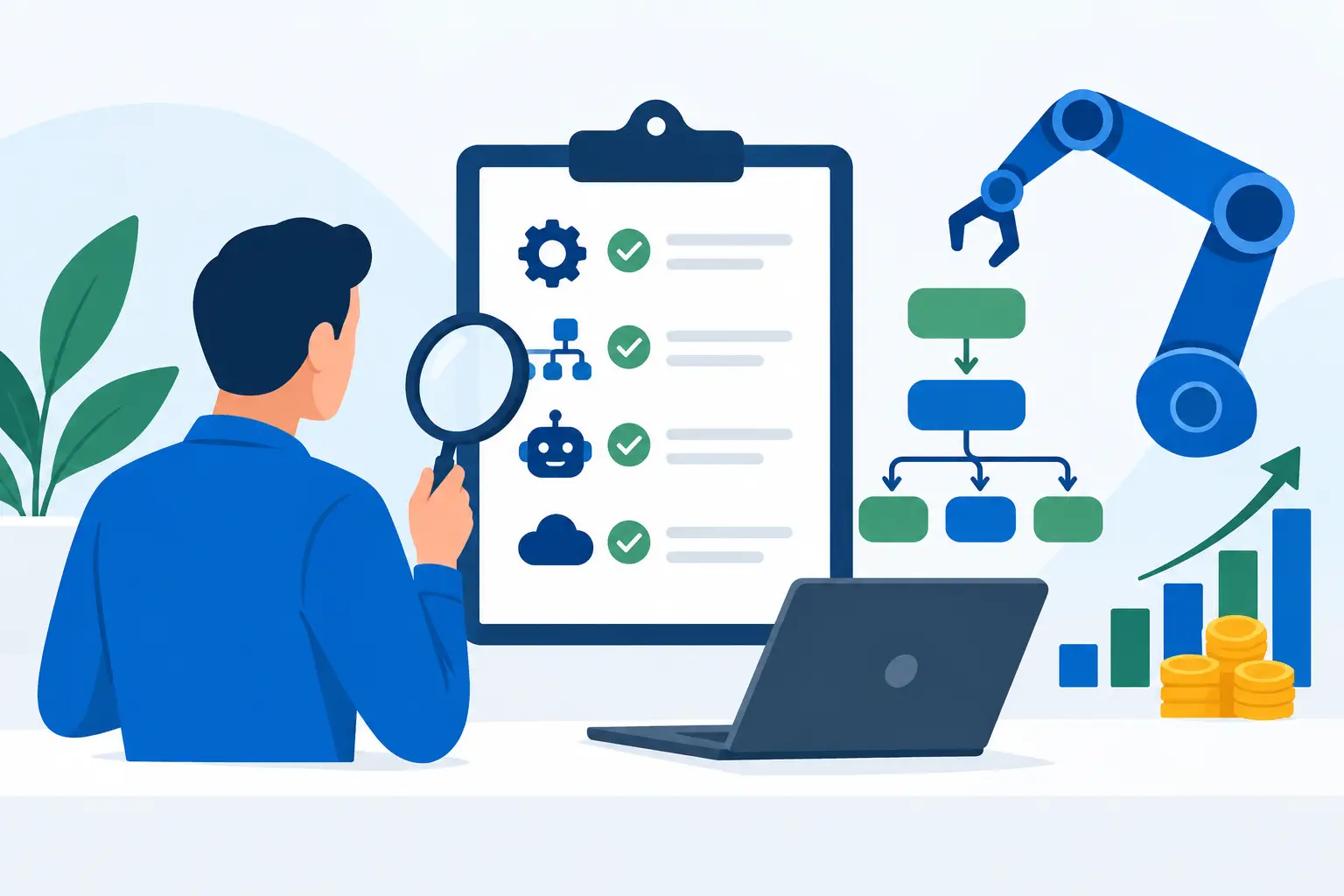
A good outside partner should do more than connect software. They should map the workflow, identify where hours are being burned, quantify the cost of delay or error, and rank opportunities by ROI. That changes the conversation from "What can we automate?" to "What should we automate first to recover the most time and money?"
That distinction is huge.
If your intake process wastes 15 staff hours per week, your follow-up lag kills lead conversion, or your billing handoff causes revenue leakage, you do not need a broad AI strategy presentation. You need a clear order of operations. Fix this first. Ignore that for now. Here is what the recovered capacity is worth. Here is how long payoff should take.
That is where outsourcing can outperform internal teams. Experienced operators have seen the same failure points across dozens or hundreds of service businesses. They know where automations tend to break. They know which workflows are worth touching and which ones should stay manual.
The risks of outsourcing automation
Outsourcing is not automatically better. A bad partner can create a different set of problems.
Some agencies oversell AI and underdeliver execution. Some freelancers can build a workflow but cannot think through operational dependencies. Some software vendors push their platform whether or not it fits your process. And many outsourced providers disappear once the build is done, leaving your team with a black box nobody can maintain.
That is why the in house vs outsourced automation question should never be answered by price alone. Cheap outsourced work is often expensive later. If the builder does not understand service operations, lead management, onboarding, billing, and fulfillment, they can easily create brittle automations that fail at the exact moment your team needs them.
The right outsourced model requires three things: clear financial prioritization, documentation your team can actually use, and direct accountability from the people doing the work. If those are missing, the project is already at risk.
How to choose based on ROI, not preference
Most owners approach this decision backwards. They start with comfort. They ask, "Should we keep this in house?" A better starting point is math.
How many hours per week are currently wasted? What does that cost in payroll? What revenue is delayed or lost because of missed follow-up, slow onboarding, manual reporting, or billing mistakes? How long would an internal build take versus an external one? What is the cost of waiting 60 or 90 more days?
Once you frame the decision that way, the right path gets clearer.
If the automation opportunity is small, ongoing, and easy to support internally, in-house may be enough. If the opportunity is large, cross-functional, and financially urgent, outsourcing usually wins because it compresses time to value.
For example, imagine a clinic or legal practice losing 10 leads per month because inquiry routing is inconsistent and follow-up is manual. If each client is worth $2,000, that is $20,000 per month in lost revenue. In that scenario, spending three months trying to build internally is not a neutral choice. It is an expensive delay.
A hybrid model often works best
For many businesses, the smartest answer is not purely in house or fully outsourced. It is staged.
Use an outside expert to audit workflows, identify the highest-return automations, clean up process design, and implement the first critical systems. Then assign internal ownership for daily use, oversight, and minor adjustments. That gives you external speed and pattern recognition without making your business permanently dependent on an outside builder.
This is usually the most practical model for founder-led service companies. You get the benefit of experience up front, when mistakes are most expensive, and internal control later, when the main need is consistency.
It also helps prevent the classic problem of automating too much too early. A good audit should tell you what not to build yet. That restraint saves money.
What to ask before you decide
Before choosing either path, get honest answers to a few operational questions. Do you have documented workflows, or are key steps still living in employees' heads? Does anyone on your team know how your tools actually connect? Can they troubleshoot failures without causing downtime? Do you know which process issue is costing you the most money right now?
If the answer to those questions is no, do not assume an in-house build will be cheaper. It may just hide the cost longer.
The strongest automation decisions are boring in the best way. They are based on workflow clarity, financial impact, implementation speed, and ownership after launch. Not hype. Not tool demos. Not a vague sense that AI should be helping somewhere.
If you want a useful rule of thumb, here it is. Build in house when you already have the operator, the process maturity, and the time. Outsource when the problem is expensive, the team is stretched, and you need the answer faster than internal trial and error will allow.
Want to know exactly where AI could save you 20+ hours a week? Book a free call at nilsdigital.com/automation.