How to Automate Sales Followup That Closes
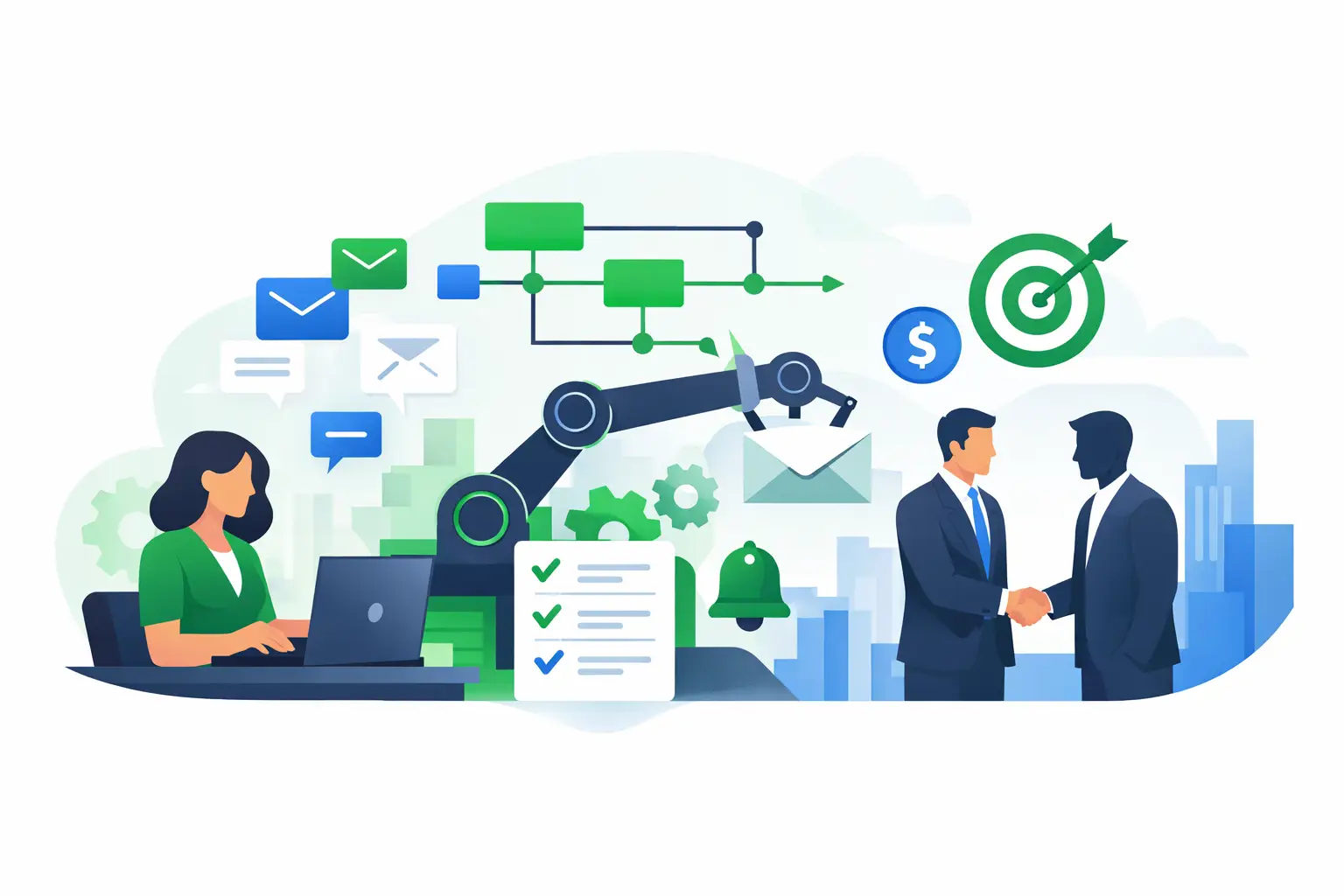
Most sales follow-up does not fail because your team is lazy. It fails because the process depends on memory, inbox discipline, and someone having a quiet afternoon. That is exactly why business owners keep asking how to automate sales followup without turning it into spam. The answer is not more software. It is a tighter system that decides who gets what, when, and why.
If you run a service business, slow follow-up is expensive in two ways. First, deals cool off. Second, your staff burns hours chasing people manually, updating notes, and sending the same messages over and over. When that happens across dozens or hundreds of leads a month, you are not dealing with a sales problem anymore. You are dealing with an operational leak.
What sales follow-up should actually be doing
A good follow-up system has one job: move the right lead to the next step with the least manual effort possible. That next step might be booking a call, replying to a proposal, completing intake, or paying a deposit. If your current process sends the same sequence to everyone, it is probably creating activity without enough progress.
This is where many owners get automation wrong. They think follow-up means writing five emails and connecting a CRM. Real automation is decision-based. If a lead books, the reminders should stop. If they click but do not reply, the message should change. If they ghost after a proposal, the sequence should shift from education to urgency. If there is no logic, you do not have automation. You have scheduled noise.
How to automate sales followup the right way
Start with the handoffs, not the copy. Before you write a single email or text, map the stages a lead goes through from first inquiry to closed deal. For most service businesses, that includes new lead, contacted, booked, attended, quoted, pending, won, and lost. Some businesses need more detail, but not much more. Too many stages create confusion and bad reporting.
Once those stages are clear, define the trigger for each one. A new web form submission might trigger an immediate text and email confirmation. A missed call might trigger a callback task plus an SMS. A proposal sent might trigger a three-day check-in, then a seven-day reminder, then a final close-the-loop message. The trigger is what makes the system run without someone babysitting it.
Then decide where automation should stop and where a human should step in. That line matters. Automated reminders are great for speed and consistency. They are not great at handling pricing objections, unusual project scope, or trust issues. If you automate past the point where a live conversation is needed, your close rate can drop even while your activity metrics look better.
The simplest automation stack usually wins
Most businesses do not need a complicated setup. They need a CRM, a form or lead source connection, email and SMS capability, task creation, and basic pipeline automation. That is enough to recover a lot of lost revenue if the logic is solid.
The mistake is stacking tools on top of a broken process. If your reps are inconsistent about updating deal stages, any automation built on those stages will be unreliable. If your lead sources send incomplete data, your personalization will be weak. Clean inputs matter more than flashy tools.
A practical build usually starts with three automations. One handles new lead response. One handles no-show or non-response recovery. One handles estimate or proposal follow-up. Those three alone cover a large share of revenue leakage for local and service-based businesses.
The sequences that usually produce the biggest return
The highest-value automation is usually the first five minutes after a lead comes in. Speed matters because intent decays fast. If someone fills out a form at 2:17 p.m. and hears nothing until tomorrow, you are already competing at a disadvantage. An instant response that confirms receipt, sets expectations, and offers the next step can buy your team time without making the lead feel ignored.
The second high-value sequence is appointment follow-up. This includes confirmations, reminders, reschedules, and no-show recovery. A lot of owners think of this as admin work, but it has direct revenue impact. One missed appointment is not just a calendar problem. It is a margin problem.
The third is post-proposal follow-up. This is where deals often stall because sales reps do not want to feel pushy, so they wait too long. Automation removes that inconsistency. You can send a polite follow-up one day after the proposal, a value-focused reminder a few days later, and a final message that asks for a yes, no, or later decision. That does two useful things: it increases response rates and clears junk deals out of the pipeline.
Personalization matters, but not the way people think
You do not need fake personalization tokens everywhere. You need relevant context. Mention the service they asked about, the location they submitted from, the appointment time they chose, or the proposal amount they received. That feels more human than stuffing first names into every sentence.
Tone also matters. A plumbing company, med spa, law firm, and B2B agency should not all sound the same. If your automation reads like it came from software, people will treat it like software. Keep the language plain. Short messages tend to perform better because they look like something a real person would send.
Where sales follow-up automation usually breaks
The biggest failure point is bad pipeline discipline. If leads sit in the wrong stage, the wrong messages fire. That creates confusion fast. A lead who already booked should not keep getting "ready to schedule?" texts. That kind of mistake makes your business look disorganized.
The second failure point is over-automation. Not every lead needs a 14-touch sequence across email, text, and voicemail drops. More touches do not always mean more conversions. Sometimes they just mean more annoyance. The right number depends on deal size, sales cycle length, and how much trust is required before purchase.
The third failure point is poor measurement. If you cannot tie your follow-up system to show rates, close rates, response rates, and revenue by source, you are guessing. Open rates are not enough. A sequence that gets fewer replies but more booked calls may be better for the business than one that looks stronger on surface metrics.
Measure the economics, not just the activity
If you want to know whether your automation is working, track a few numbers consistently. Measure average lead response time, booking rate from new inquiries, show rate, proposal response rate, close rate, and days to close. Then compare those numbers before and after automation.
Also put a dollar value on labor saved. If your team spends 40 hours a month on manual follow-up and automation cuts that in half, that is not just convenience. That is payroll capacity you can redirect into selling, service delivery, or client retention. For many businesses, the labor savings alone justify the project before you even count the extra deals closed.
This is the part many agencies skip. They will happily sell a workflow build without proving the math. That is backwards. If the process cannot plausibly recover hours or dollars, it should not be a priority.
A practical example of how this looks
Say a home services company gets 200 leads a month. Before automation, average response time is four hours, 55 leads book, 38 show up, and 14 close. The office manager spends roughly 30 hours a month on reminders and follow-up.
After a clean automation setup, the business responds instantly, booking climbs to 72, show-ups rise to 54, and closes reach 20. Manual follow-up time drops by 15 hours a month. Even with conservative ticket values, that is a meaningful lift in monthly revenue plus reclaimed labor capacity.
Not every business gets that exact result. The point is simpler: the upside comes from fixing process friction in a few high-leverage places, not from turning your sales team into a chatbot.
Build for clarity first, then scale
If you are serious about how to automate sales followup, start smaller than you think. Build one sequence for new leads, one for no-shows, and one for proposals. Test them. Watch where leads drop off. Tighten the language. Fix your stage rules. Then expand.
That approach beats trying to automate every scenario in week one. A smaller system that your team actually uses will outperform a giant setup that no one trusts. Clarity scales. Complexity usually breaks.
The real goal is not more automation. It is faster response, fewer dropped leads, less wasted payroll, and a sales process that produces the same result whether your best rep is in the office or not.
Want to know exactly where AI could save you 20+ hours a week? Book a free call at nilsdigital.com/automation.