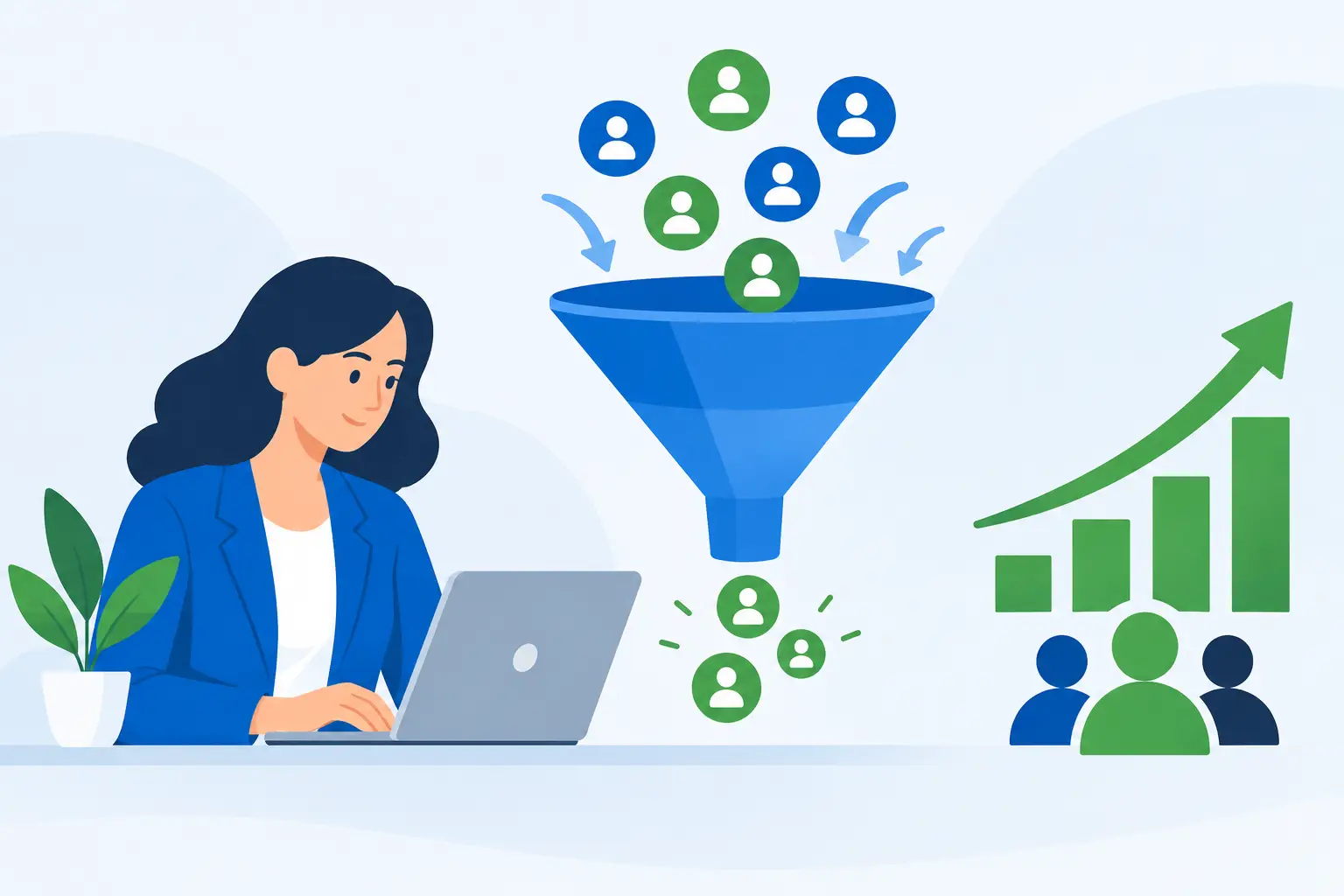
Build a Client Acquisition System That Pays
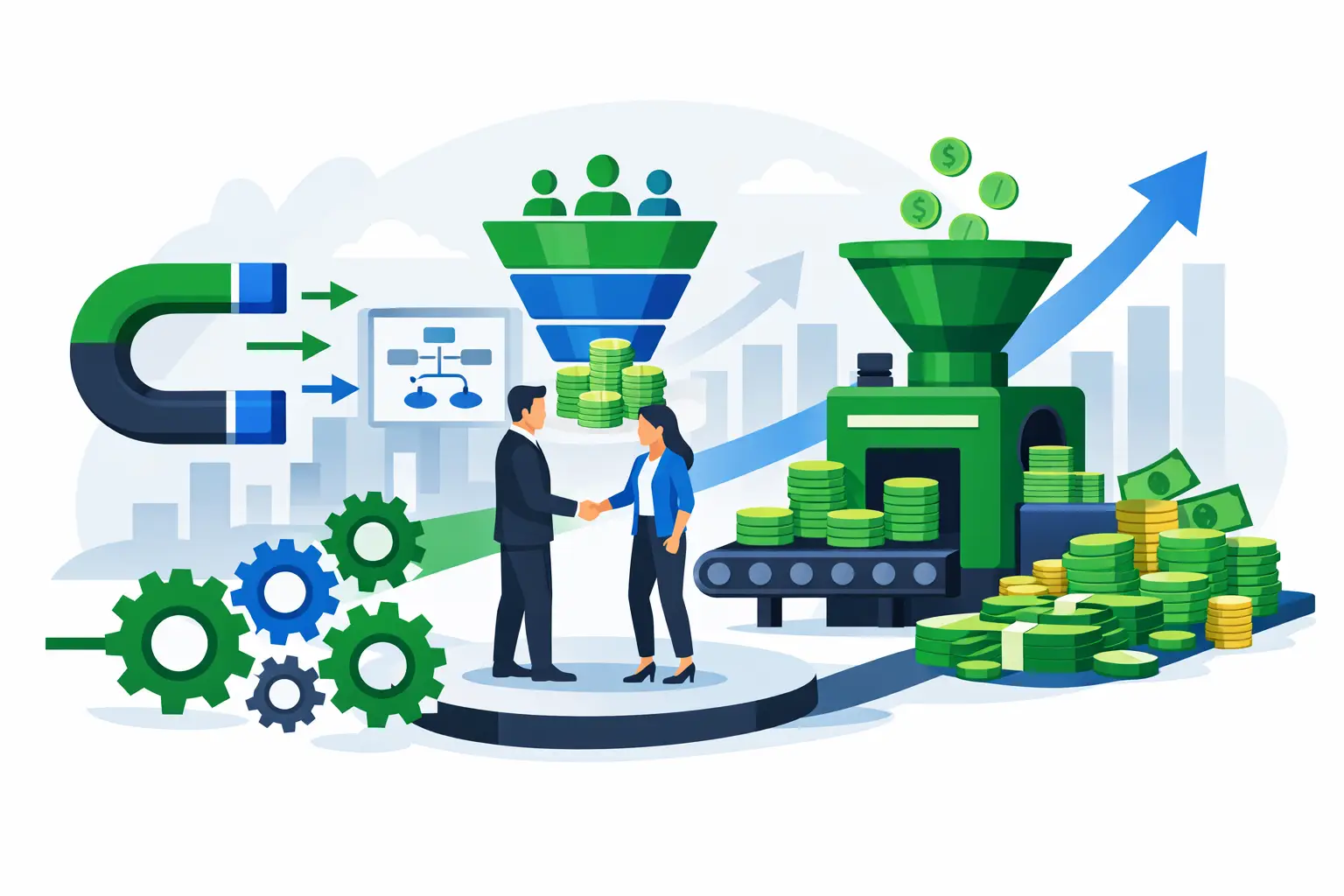
Most service businesses do not have a lead problem. They have an inconsistency problem. One month, referrals are strong. The next, the phone is quiet. The owner responds by posting more, buying another software tool, or handing money to an agency that reports clicks while the calendar stays half empty.
A client acquisition system fixes that by turning growth from a recurring guessing game into a measurable operating process. It is not a logo refresh, a stack of disconnected marketing tactics, or a promise that more traffic will somehow solve a weak sales pipeline. It is a deliberate path from buyer intent to booked appointment to profitable customer, with numbers attached at every stage.
For a local or service-based business, that distinction matters. You do not need 100,000 followers. You need enough qualified opportunities, at a cost your margins can support, and a follow-up process that does not let good leads go cold.
What a client acquisition system actually does
A working system answers four practical questions: Where will qualified prospects come from? What will make them take the next step? How quickly will your team respond and sell? Can you acquire that client profitably?
If any answer is vague, growth is fragile. A company can generate plenty of inquiries and still lose money because the leads are wrong, the landing page is unclear, calls are missed, or the sales team takes two days to reply. Likewise, a great closer cannot carry a business indefinitely if there is no dependable source of new conversations.
The system should connect five functions: demand capture, conversion, follow-up, sales, and measurement. Each one has a job. Google Ads can capture high-intent searches. A focused landing page can convert that intent into a call or form submission. Automated follow-up can make sure the prospect gets a response while interest is high. A defined sales process can turn qualified calls into clients. Reporting can reveal whether the economics work.
That is less exciting than chasing the latest platform. It is also how owners get control.
Start with unit economics, not ad spend
Before buying traffic, calculate what a new client is worth. Use real numbers, not the optimistic version you repeat when discussing growth.
Start with average collected revenue per client, gross margin, retention or repeat value, and the capacity your team can fulfill without harming service quality. Then decide what you can responsibly pay to acquire one client.
For example, a clinic might collect $1,500 from a new patient relationship and retain 60% after direct delivery costs. It may be comfortable spending $250 to acquire that patient. A legal firm with a $6,000 average matter and strong margins may support a much higher acquisition cost. The acceptable number depends on the business. There is no universal “good” cost per lead.
From there, work backward. If your closing rate on qualified appointments is 25%, and you can pay $250 per acquired customer, a qualified appointment can cost up to $62.50. If 50% of leads book and attend a qualified appointment, your maximum cost per lead is roughly $31.25. Those thresholds tell you whether a campaign is working long before a dashboard full of impressions does.
A good agency should be willing to have this conversation before asking for a budget. If nobody has asked about margins, close rates, capacity, and lifetime value, they are managing activity, not return.
Build the path from search to scheduled call
For most established service businesses, paid search is a strong starting point because it captures people already looking for help. Someone searching “emergency plumber near me,” “commercial cleaning quote,” or “Chicago estate planning attorney” has a defined problem and an active intent to solve it. That is very different from interrupting someone scrolling social media.
But intent alone does not create revenue. The page after the click has to earn the conversion.
A high-converting funnel has one primary action. For higher-ticket services, that is often a strategy call, estimate request, consultation, or appointment. The page should make three things immediately clear: who you help, what outcome you provide, and why a prospect should trust you with the next step.
Specific proof beats broad claims. “Serving homeowners since 2008” is fine. “We repaired 1,200+ roofs across the Chicago area with a written workmanship guarantee” gives a buyer something concrete to evaluate. Explain the process, answer the likely objection, show relevant proof, and make the action easy to take on mobile.
Do not send paid traffic to a generic homepage and hope visitors figure it out. A homepage has to serve employees, vendors, existing customers, job seekers, and multiple service lines. A campaign page should serve one buyer with one problem and one next step.
Conversion rates vary by offer, market, and traffic quality. Still, service businesses should expect the funnel to do real work. A target in the 10-20% range for paid-traffic conversion is often achievable when the offer, page, and search terms are aligned. If your page converts at 3%, doubling ad spend usually doubles waste.
Match the offer to the buyer's level of urgency
Not every prospect is ready to buy the same way. Emergency services need immediate phone access and clear availability. A long-consideration B2B service may need a useful consultation, assessment, or cost-savings conversation before a sales call makes sense. Healthcare and professional services need trust, compliance, and a clear explanation of what happens next.
The trade-off is simple: lower-friction offers usually create more leads but require stronger qualification. Higher-friction offers create fewer leads but can improve lead quality. Test the offer against booked, attended, qualified appointments and closed revenue, not form volume alone.
Speed-to-lead is part of marketing
A lead that waits until tomorrow is not the same lead you received today. Interest fades, competitors answer first, and the prospect moves on. This is why a client acquisition system cannot stop at the contact form.
The minimum standard is an immediate confirmation, a clear scheduling option, and a prompt human response when the request justifies one. For a high-value service, a missed call should trigger a return-call task and a text or email acknowledgment. For form submissions, the follow-up should reference the service requested and provide a simple next action.
This is where operations and marketing meet. If leads are manually copied from email to a spreadsheet, then passed to a salesperson who may or may not see them, you have a revenue leak. Automation can route inquiries, assign owners, update a CRM, send reminders, and surface stale leads. It does not replace a competent salesperson. It makes sure that salesperson is working the opportunity while it still matters.
Measure response time. Measure contact rate. Measure show rate. A $40 lead that gets called in three minutes can outperform a $20 lead that gets called the following afternoon.
Make sales handoffs visible
Owners often blame advertising for a sales problem because the handoff is invisible. Marketing reports 40 leads. Sales says they were bad. Nobody can show how many received a first response, how many were contacted, how many qualified, or what objection killed the deal.
Fix that with shared definitions. A lead is not automatically a qualified opportunity. A qualified opportunity is not a booked appointment. A booked appointment is not revenue. Your CRM stages should reflect the actual sales process, and each stage should have an owner.
Review lost opportunities every week. If prospects repeatedly say the price is too high, the issue may be positioning, qualification, or the offer itself. If they say they chose another provider, review response speed and competitive proof. If no-shows are high, improve reminders and confirm that your ad promise matches the sales conversation.
The point is not to create more reporting. It is to find the exact stage where dollars are escaping.
Use a scorecard that connects activity to profit
A campaign should be judged on a small set of numbers that connect in sequence: spend, leads, cost per lead, qualified opportunities, booked appointments, show rate, close rate, cost per acquired client, and collected revenue.
That sequence prevents expensive mistakes. Cheap leads are worthless if they do not qualify. A low cost per booked call can still be unprofitable if people do not show. A high cost per lead can be acceptable if those leads close into valuable, retained clients.
Track the numbers weekly, but avoid overreacting to one bad day. Local search volume fluctuates. Sales cycles differ. Some services need 30 to 90 days to show collected revenue. The right decision depends on enough data and the economics you established at the beginning.
At Nils Digital, the standard is straightforward: if we cannot connect the work to more clients, recovered hours, or recovered dollars, it does not belong in the plan. That is why the website, ads, follow-up, and reporting need to be treated as one system instead of four separate projects.
When to fix the system before scaling it
More budget makes sense when leads are qualified, response time is fast, sales capacity exists, and acquisition costs remain inside your target. It does not make sense when the owner is already unable to return calls, the calendar is booked weeks out, or fulfillment quality is slipping.
In those cases, fix capacity first. Tighten intake, automate repetitive handoffs, hire where the numbers support it, or narrow the geographic and service focus. Growth that overwhelms delivery can damage reviews, referrals, and margins faster than it builds revenue.
A client acquisition system should make demand predictable enough that you can make smart operating decisions. It should tell you when to spend more, when to repair the funnel, and when the real bottleneck is inside the business.
Ready to turn your website into a client-getting machine? Book a free strategy call at https://nilsdigital.com/marketing.