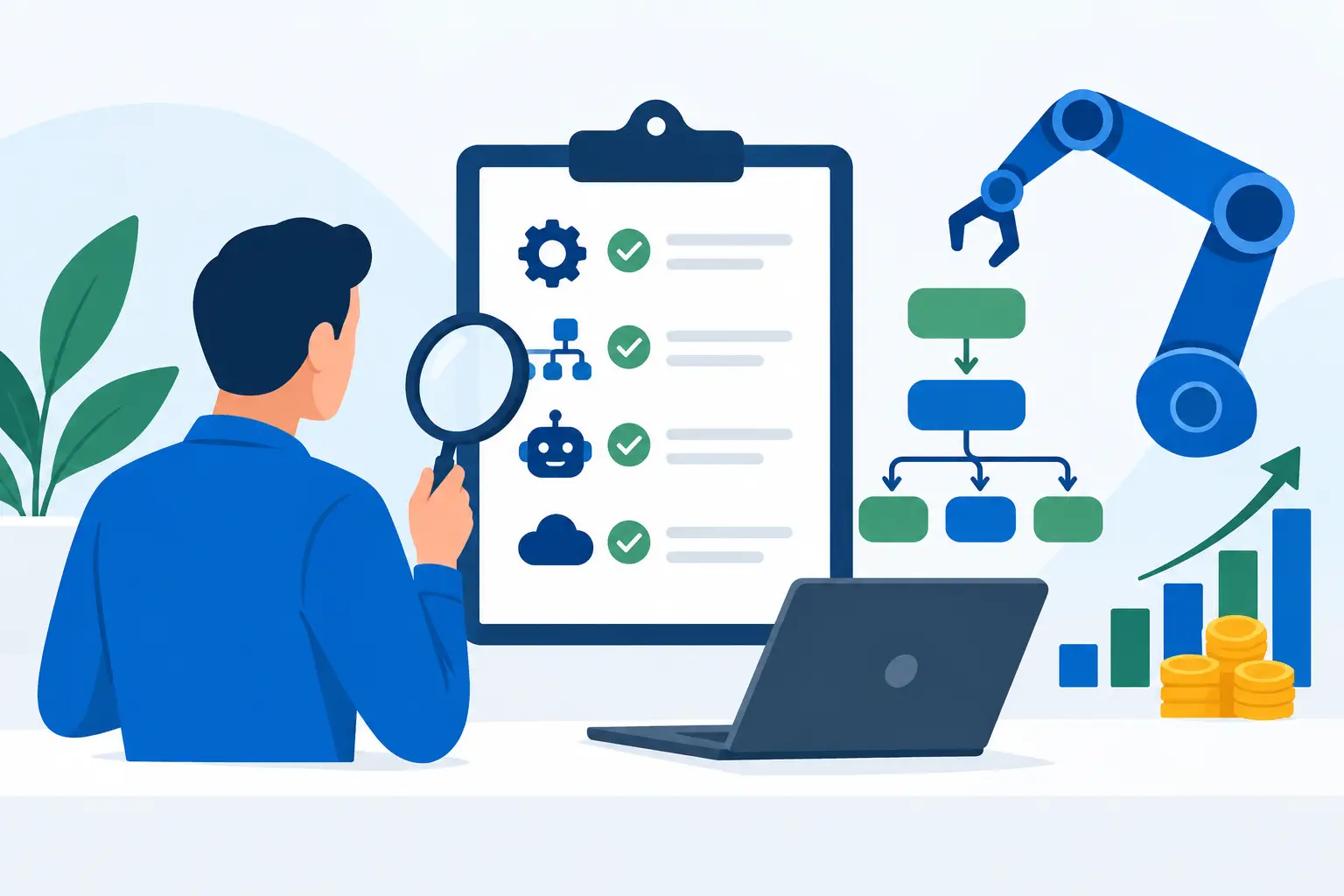
Automation Opportunities in Service Business

A lot of service businesses do not have a lead problem. They have a handoff problem.
A prospect fills out a form, someone forgets to call, the estimate sits in an inbox, onboarding takes three days, billing goes out late, and your team spends Friday fixing mistakes that should not exist. That is where the biggest automation opportunities in service business usually live - not in flashy AI demos, but in the quiet gaps between steps where time, revenue, and trust leak out.
If you run a growing service company, automation is not about replacing people. It is about removing low-value admin, tightening response times, and making sure every client moves from inquiry to delivery to payment without friction. The businesses that get this right do not just save time. They protect margin, reduce rework, and make growth easier to absorb.
Where automation opportunities in service business show up first
Most owners start by asking what tool they should buy. That is usually the wrong first question.
The better question is where your team repeats the same action enough times that a delay, missed step, or typo now has a real cost. In service businesses, those costs pile up fast because your operation is people-heavy. One skipped reminder can lead to a no-show. One sloppy handoff can create a client complaint. One unpaid invoice can sit for 45 days because no follow-up happened.
The best automation opportunities tend to appear in five places: lead intake, scheduling and follow-up, client onboarding, fulfillment handoffs, and billing. These areas matter because they happen often, involve multiple people, and directly affect either cash flow or capacity.
If a workflow touches revenue, payroll, or client experience, it deserves a hard look. If it happens daily, it should probably be systemized. If your team says, "We always have to remember to..." that is usually a red flag.
Start with wasted hours, not software
Here is the practical test. Look at one week of operations and ask three questions.
Where did people copy and paste the same information into multiple systems? Where did work stall because someone had to remember the next step? Where did a client or staff member have to ask for an update that should have been automatic?
That is your shortlist.
Too many businesses buy automation tools before they measure the problem. Then six months later they have more subscriptions, more complexity, and the same bottlenecks. Good automation starts with math. If a process eats 10 hours a week across your team, and your loaded labor cost is $35 an hour, that is $18,200 a year before you even count errors or lost sales. If a delayed follow-up costs you two clients a month, the financial impact is even higher.
This is why the highest-return automation work is often boring on the surface. Boring is good. Boring usually means predictable. Predictable processes are the easiest to automate and the easiest to tie to ROI.
Lead intake and speed-to-contact
For many service businesses, the first win is lead handling.
A form submission, call, or booked appointment should trigger immediate action. That might mean routing the lead to the right person, sending a confirmation text, creating a record in your CRM, assigning a task, and setting follow-up reminders if no one makes contact within a defined window.
The reason this matters is simple: speed converts. If your team responds in five minutes instead of five hours, close rates usually improve. If every inquiry gets logged correctly, you stop losing track of valuable opportunities. If the right rep receives the right lead with the right context, fewer conversations start cold.
This is also one of the easiest areas to quantify. Compare current lead volume, contact time, show rates, and close rates against what happens after automation. Even modest gains here can pay for the work quickly.
The trade-off is that automation cannot rescue a weak sales process. If your intake questions are bad, your offer is unclear, or your team does not follow up well, you will just automate chaos faster. Fix the process first, then automate it.
Onboarding is where margin gets protected
Many owners obsess over getting the client and ignore what happens next. That is expensive.
Client onboarding often involves contracts, questionnaires, scheduling, internal kickoff notes, payment collection, document requests, and expectation-setting. When this process is manual, clients feel uncertainty and your team wastes hours chasing information.
A strong automated onboarding flow can send the right documents in sequence, collect missing details, trigger internal tasks, alert the right departments, and keep the client informed without your staff writing the same email 40 times a month.
The payoff is bigger than time savings. Better onboarding reduces project delays, cuts preventable confusion, and gets revenue-producing work started sooner. It also lowers the burden on senior staff who should not be spending their time tracking signatures and attachments.
For firms with high-value clients - legal, healthcare, financial, real estate, consulting, agency services - this is usually one of the cleanest operational wins.
Fulfillment handoffs are a hidden profit leak
A lot of service businesses are held together by Slack messages, sticky notes, and memory.
Sales promises one thing. Operations hears something slightly different. The client sends a file by email. Someone forgets to update the project board. A technician arrives without the latest notes. None of these failures look huge by themselves, but together they create missed deadlines, extra labor, and stressed staff.
This is where automation opportunities in service business get serious. Internal handoffs should not depend on heroics.
When a deal closes, the next steps should happen automatically: project creation, checklist generation, task assignment, due dates, service-specific instructions, and client communication. When a milestone is completed, the next team should know instantly. When something is late, the right person should be alerted before the client notices.
You do need judgment here. Not every fulfillment process should be fully automated. Custom work, high-risk compliance tasks, and nuanced client delivery often need a human checkpoint. The goal is not to remove oversight. The goal is to remove administrative drag around the oversight.
Billing and collections are usually under-automated
If cash comes in late, everything feels harder.
Yet billing is still one of the most neglected processes in service businesses. Invoices go out manually. Payment reminders depend on someone remembering. Work starts before deposits are collected. Aging receivables get reviewed too late.
Automation can tighten this up fast. Invoices can be triggered by milestones, appointments, signed agreements, or completed work. Reminder sequences can go out automatically. Failed payments can create follow-up tasks. Deposits can be required before scheduling moves forward.
This is not just an admin improvement. It is a cash flow improvement. Recovering even a small percentage of delayed revenue can materially change how a business operates month to month.
The caution here is client experience. Collections should be firm but not tone-deaf. If your service model involves exceptions, retain some manual control over sensitive accounts.
AI helps most when paired with process discipline
There is a lot of noise around AI right now, and most of it is not useful to operators.
AI can absolutely help in service businesses. It can summarize calls, draft follow-ups, categorize inquiries, extract information from documents, answer routine internal questions, and support reporting. But AI works best after your workflow is already mapped.
If your process is unclear, AI adds unpredictability. If your rules are clean, AI can reduce manual handling and speed up execution. Think of it this way: traditional automation handles the straight lines, and AI helps with the messy middle.
That distinction matters because not every task should be handed to AI. High-liability communications, regulated workflows, and anything client-sensitive should be reviewed carefully. The right standard is not whether AI can do it. It is whether it can do it accurately enough to protect revenue, compliance, and trust.
What to automate first if you want fast ROI
If you want results in the next 14 to 30 days, start where frequency and financial impact meet.
That usually means one of these combinations: lead intake plus follow-up, onboarding plus payment collection, or fulfillment handoffs plus status updates. Each affects either conversion, capacity, or cash. Each also tends to involve repetitive actions that are easy to measure before and after.
Do not try to automate the entire company at once. That is how projects stall.
Pick one workflow. Map the current steps. Count the hours, errors, delays, and missed dollars. Then redesign the process with a mix of automation and human checkpoints. Once it is working, move to the next bottleneck.
That approach is less exciting than buying the latest AI tool. It is also how real businesses recover profit.
The companies that benefit most from automation are usually not the ones chasing trends. They are the ones tired of paying smart people to do work a system should handle.
Want to know exactly where AI could save you 20+ hours a week? Book a free call at nilsdigital.com/automation.