Automation Audit Versus Software Implementation

A software demo can make almost any operational problem look simple. A few screens, a clean dashboard, and suddenly it seems like the answer to missed follow-ups, slow onboarding, billing delays, and overloaded staff is one new platform. That is where automation audit versus software implementation becomes a costly decision. Pick the tool first, and you may spend months configuring software around a broken process.
For a growing service business, the real question is not, “Which AI tool should we buy?” It is, “Where are we losing time and money, what is causing it, and is software the best fix?” Those are different questions. They require different work.
Automation Audit Versus Software Implementation: The Real Difference
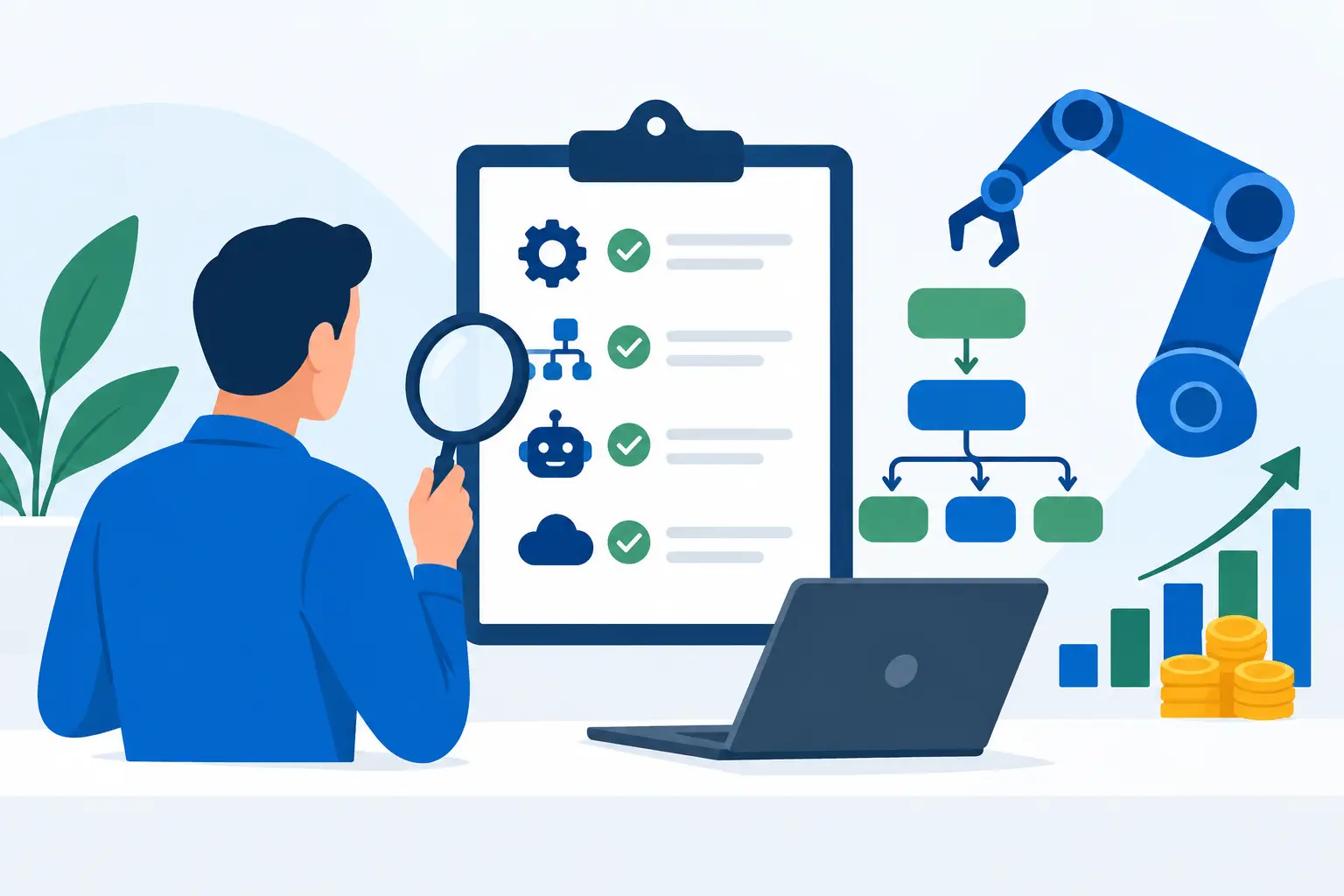
An automation audit is diagnosis. Software implementation is construction.
The audit looks across the way work actually moves through your business: marketing handoffs, lead response, sales follow-up, client onboarding, fulfillment, internal approvals, billing, reporting, and support. It identifies where people repeat the same task, where information gets re-entered, where a handoff stalls, and where a missed step turns into lost revenue or unnecessary payroll.
Implementation starts after that. It is the work of selecting, configuring, connecting, testing, documenting, and maintaining the systems that solve the right problems. This might include a CRM workflow, an AI intake assistant, automated estimates, appointment reminders, billing triggers, internal task routing, or reporting dashboards.
Both have value. The mistake is treating them as interchangeable.
An audit asks whether the work should exist
A good audit does not start with a favorite software platform. It starts with the workflow and the economics behind it.
Say your office manager spends 10 hours each week chasing missing client paperwork. A software vendor may recommend a form portal. That could help. But an audit may reveal that the real issue began earlier: sales reps are promising a fast start without collecting required documents, the welcome email is unclear, and nobody owns the follow-up sequence.
The solution may include a portal, but software alone is not the solution. The process needs an owner, a trigger, a deadline, and an escalation path. Otherwise, you have simply moved a messy process into a more expensive system.
Implementation asks how to make the fix work reliably
Once the business case is clear, implementation matters just as much. A workflow on a whiteboard does not recover hours. Someone has to build the logic, connect the systems, test edge cases, train staff, and make sure the automated action does not create a new customer-service problem.
This is why implementation is not a lower-level task. It is specialized work. But it should be guided by a defined financial objective, such as reducing no-shows, cutting invoice turnaround from 14 days to three, or giving sales staff back 15 hours a week for live conversations.
Without that target, implementation becomes a technical project that can look busy while producing no measurable return.
Why Implementation-First Creates Expensive Problems
Most service businesses do not lack software. They have too much of it.
A typical operation may already be using a CRM, scheduling tool, accounting system, shared inbox, project manager, online forms, text messaging platform, spreadsheets, and several AI subscriptions. The issue is not that none of these tools can automate work. The issue is that nobody has mapped what happens between them.
When implementation comes first, three common failures follow.
First, the team automates a bad process. A slow approval chain, unclear intake form, or unnecessary internal update gets faster, but it does not disappear. Second, data becomes fragmented. Staff must check multiple systems because no one established a single source of truth. Third, adoption fails. People go back to email, texts, and spreadsheets because the new workflow adds friction instead of removing it.
That failure gets blamed on the platform. Sometimes the platform is the wrong fit. More often, the business bought an answer before defining the problem.
Consider a real estate team that wants AI to qualify leads. If leads are responding slowly because agents do not have a clear rotation, automation will not fix accountability. If lead response is slow because agents waste 20 minutes gathering the same information from every inquiry, AI-assisted intake could create immediate value. The difference is not the tool. It is the diagnosis.
What a Decision-Ready Automation Audit Should Deliver
An audit should not be a vague workshop, a stack of trendy AI recommendations, or a slide deck that tells you to “work smarter.” You should be able to make an investment decision from it.
A useful audit maps the current state in enough detail to expose the leaks, then ranks fixes by financial impact and practical effort. At minimum, it should give you four things:
- A workflow map that shows how work moves from first inquiry through payment, including the people, systems, handoffs, and delays involved.
- A cost-of-inaction calculation that translates wasted hours, missed follow-ups, errors, slow collections, and rework into dollars.
- A prioritized opportunity list that separates quick wins from larger system changes and identifies what should not be automated yet.
- A build roadmap with clear next steps, ownership, expected return, and the order of implementation.
The math matters. If a coordinator spends six hours a week manually moving information between a form, CRM, and project board, that is not just an annoyance. Multiply it by payroll cost, account for the work they cannot do instead, and estimate the error rate. Now you can compare the likely savings against implementation cost.
At Nils Digital, that financial framing is the point of the audit. Across the last 30 audits, the team has identified more than $2.4 million in recoverable revenue and operational savings. Not every opportunity deserves to be built. If the numbers do not support it, it should not make the roadmap.
When Software Implementation Is the Right First Move
There are cases where you do not need a broad audit before acting.
If you have a narrow, urgent, well-defined problem, implementation may be the sensible first step. For example, your payment processor is failing, a compliance requirement demands a specific workflow, or your current CRM is being retired on a fixed date. In those situations, delay can cost more than moving forward.
Implementation can also come first when the process is already proven and documented. If every team member follows the same onboarding sequence, the handoffs are clear, and you know exactly where manual work is piling up, building the automation may be straightforward.
Even then, spend time on discovery. The question is not whether you call it an audit. The question is whether someone has verified the workflow, constraints, exceptions, and expected return before building.
How to Decide What Your Business Needs
Start with the bottleneck, not the technology.
If your team says, “We need AI,” ask what AI needs to improve. Faster lead response? Fewer intake errors? Less admin work? Better collections? More capacity without another hire? Put a number next to the answer.
Then look at the scope of the problem. If delays appear across departments, staff rely on workarounds, or you cannot explain where a lead or client gets stuck, begin with an audit. You need visibility before you need more tools.
If the pain is confined to one repeatable process and the desired outcome is clear, implementation may be enough. A good operator should tell you which is true, even when the smaller engagement is less profitable for them.
Be cautious of anyone who sells a platform before asking how your business works. Software vendors sell software. Freelancers may sell the tool they know best. A business-minded automation partner should be willing to recommend a simpler fix, a process change, or no automation at all when that produces the better return.
The Best Sequence Is Diagnose, Prioritize, Build
For most established service businesses, the strongest path is simple: audit first, implement second, measure throughout.
The audit gives you the operating picture. Prioritization prevents your team from chasing low-value projects. Implementation turns the highest-value opportunities into systems your staff will actually use. Measurement confirms whether the promised hours and dollars are being recovered.
That sequence protects you from the most common automation mistake: paying to make the wrong work happen faster. It also protects your team. When people understand why a workflow is changing and see that it removes pointless effort, adoption gets easier.
You do not need more AI for the sake of AI. You need a clear view of where your operation is leaking profit, a plan that puts the biggest opportunities first, and a team accountable for the outcome. Want to know exactly where AI could save your business 20 or more hours a week? Book a free call with Nils Digital’s automation team.