AI Tools vs Automation Consultant

You can buy another AI tool in 15 minutes. That does not mean your business will run better by Friday.
That is the real issue behind ai tools vs automation consultant. Most service businesses do not have an “AI problem.” They have a workflow problem. Leads sit too long before follow-up. Intake gets retyped three times. Onboarding depends on whoever remembers the checklist. Billing slips because one handoff broke upstream. Software can help, but only if someone first figures out what is actually costing you time and money.
AI tools vs automation consultant: what are you really buying?
An AI tool is software. It gives you features. Maybe it writes drafts, summarizes calls, routes tasks, answers basic questions, or connects apps. In the best case, it removes a repetitive step and saves your team time.
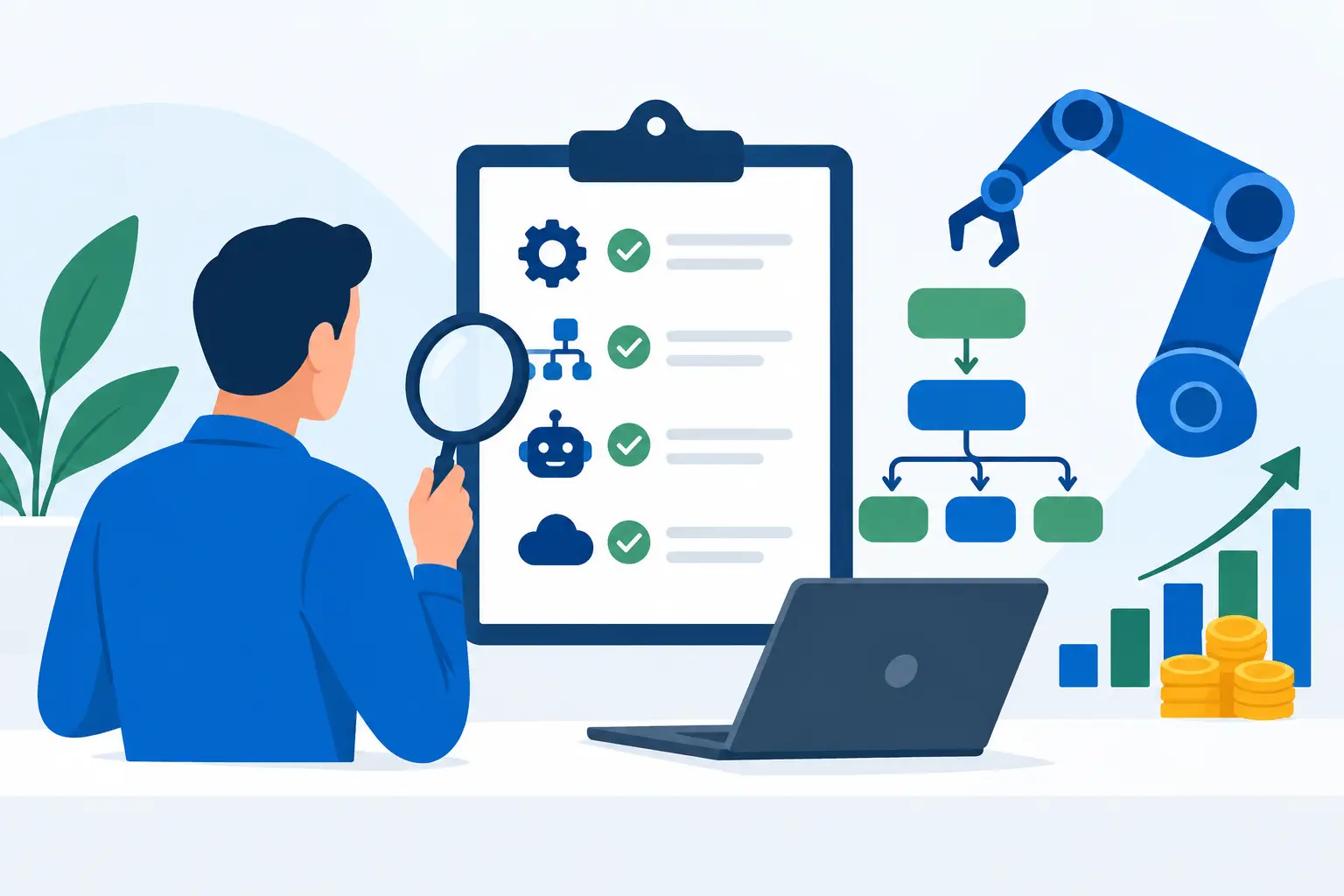
An automation consultant is not the tool. They are the person or team diagnosing where your operation leaks profit, what should be automated first, what should stay human, and how to implement changes without breaking the business. If they are good, they are not selling “AI.” They are selling recovered hours, fewer errors, faster response times, and a clear return.
That distinction matters because business owners often compare the monthly price of software to the fee for consulting and assume the tool is the cheaper answer. Sometimes it is. But software that never gets adopted, gets used wrong, or solves the wrong bottleneck is not cheaper. It is just a lower upfront cost with a slower and less obvious waste.
When AI tools are enough
If your process is already clean, documented, and stable, an AI tool can absolutely do the job. Say your team has a consistent intake form, a defined handoff to sales, and clear follow-up rules. Adding AI to summarize calls or draft recap emails may save a few hours a week with very little risk.
The same is true for narrow use cases. If you only need help with one repetitive task, like transcribing meetings, sorting support tickets, or generating first drafts for proposals, a tool may be the right move. The problem is contained. The success metric is easy to track. You do not need a full workflow redesign to get value.
This is where many software vendors sound convincing, because in those cases they are right. If the process is healthy and the task is simple, buying software can be the fastest path.
When a consultant pays for themselves
Things change when the problem is not one task but the chain around it.
Most growing service businesses are not losing money because nobody has ChatGPT or an automation platform. They are losing money because five people touch the same record, nobody owns the handoff, and the process changed six times without being documented. That is not a software selection issue. That is an operations issue.
A good consultant starts with the math. How many hours are being spent on manual follow-up? How many leads go cold because nobody replied in time? How many invoices are delayed because data has to be cleaned by hand? How much payroll is tied up in repetitive admin that should have been automated a year ago?
Once you quantify the waste, priorities become obvious. You stop asking, “What AI tool should we buy?” and start asking, “Which fix returns the most cash the fastest?” That is a much better question.
For example, a clinic might think it needs AI for marketing content. But if new patient inquiries are taking two hours to reach the right person, the bigger win is automating lead routing, intake confirmation, reminders, and follow-up. A real estate team might want AI-generated listing copy, but the more expensive problem is inconsistent lead assignment and no-show appointments. An agency may be excited about proposal writing tools while account setup, onboarding, and billing still happen across four disconnected systems.
In each case, the consultant is not adding magic. They are preventing you from automating the wrong thing first.
The hidden cost of DIY AI
DIY is attractive because it feels fast and cheap. You sign up, connect a few apps, watch a tutorial, and assume you are modernizing the business.
What usually happens is less clean. One person on the team becomes the unofficial automation owner. They build a few workflows on top of a messy process. Edge cases get ignored. Nobody documents what was done. Then something fails quietly - leads stop syncing, reminders do not send, tasks duplicate, data lands in the wrong field - and now the business has a new layer of operational risk.
That does not mean DIY never works. It does mean most owners underestimate the cost of partial implementation. Saving three hours a week is nice. But if the workflow occasionally drops qualified leads, creates billing errors, or confuses staff, the savings disappear fast.
This is why ai tools vs automation consultant is not really a tech question. It is a risk question. If the process touches revenue, customer experience, compliance, or team capacity, mistakes get expensive.
What a strong automation consultant should actually do
A consultant worth paying should not start with a favorite tool. They should start with your numbers.
They should map the workflow across marketing, sales, fulfillment, onboarding, billing, and operations. They should identify where labor is being burned, where delays happen, where data breaks, and where human involvement is still necessary. They should rank fixes by financial impact, not by what sounds flashy in a demo.
That means some recommendations will be simple. Maybe the highest ROI move is not “AI” at all. Maybe it is fixing form logic, cleaning up pipeline stages, or creating one source of truth for client status. That is a good sign. Serious operators do not force AI where a better process would solve the issue faster.
They should also give you a roadmap you can act on. Not theory. Not trend slides. Not a pile of automations your team cannot maintain. You need clear priorities, expected impact, and a realistic sequence.
How to decide which path fits your business
Start with three questions.
First, is the problem isolated or systemic? If it is one contained task, a tool may be enough. If the issue spans multiple handoffs or departments, you probably need consulting first.
Second, can you measure the cost of the current process? If you cannot estimate wasted hours, delays, missed revenue, or payroll tied up in manual work, you are not ready to shop tools yet. You need diagnosis before software.
Third, who will own implementation? If you have an internal operator who understands systems, documents changes, and can manage exceptions, a tool has a better chance of succeeding. If nobody owns process improvement today, software alone will likely stall.
There is also a middle ground. Some businesses need a consultant to audit and prioritize, but not to build everything. That can be the smartest option when you want clarity before committing to full implementation. You pay for a map, keep the roadmap, and decide whether to handle it in-house or bring in help.
The wrong way to compare cost
A lot of owners compare a $200 monthly tool to a multi-thousand-dollar consulting engagement and stop there. That is the wrong comparison.
The right comparison is total financial impact over the next 90 days. If a consultant identifies one broken workflow that is wasting 25 staff hours a week, delaying invoices, or letting leads go stale, the value can dwarf the fee. On the other hand, if your business only needs AI-assisted note summaries, paying for strategy would be overkill.
Price matters. But price without context is how businesses end up stacking subscriptions while the same bottlenecks stay in place.
The businesses that get real value from AI are usually not the ones chasing the newest app. They are the ones that know their numbers, fix the highest-value constraint first, and treat automation as an operational investment instead of a novelty purchase.
If you are serious about growth, that is the standard.
Want to know exactly where AI could save you 20+ hours a week and where it will not? Book a free call at nilsdigital.com/automation.
The smartest automation decision is rarely the most exciting one. It is the one you can defend with math 30 days from now.