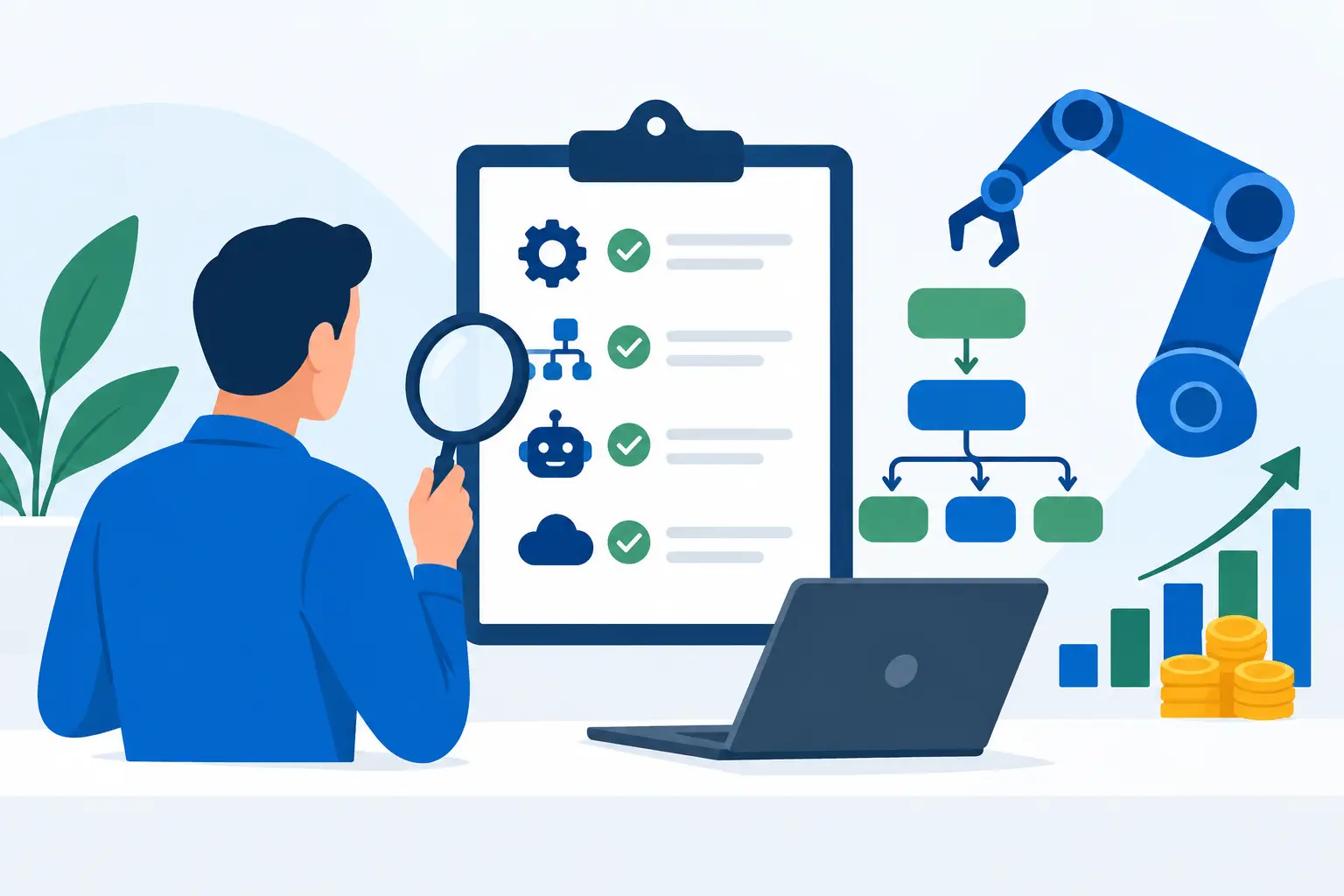
AI Consulting for Service Businesses

Most business owners do not need more AI ideas. They need fewer manual handoffs, fewer dropped balls, and a clear answer to one question: where does automation actually pay off first?
That is where ai consulting earns its keep. Not by showing you flashy tools. Not by stapling ChatGPT onto a broken process. Real consulting starts with the math. Where are hours being burned? Where are leads stalling? Where are staff doing work a system should handle in seconds? If the answer cannot be tied to time recovered, dollars recovered, or capacity created, it is not a priority.
For service businesses, that distinction matters. A law firm, clinic, agency, real estate team, or home service company does not win because it has the most AI apps. It wins because it responds faster, follows up better, invoices on time, onboards clients cleanly, and gives its team fewer chances to make expensive mistakes.
What ai consulting should actually do
Good ai consulting is not software reselling dressed up as strategy. It is an operational diagnosis.
The job is to look across the business - marketing, sales, onboarding, fulfillment, billing, reporting, and internal admin - and find the places where labor is getting wasted or revenue is leaking. Then those issues get ranked by financial impact, not by what sounds exciting.
That usually means the first wins are boring on paper and valuable in practice. Lead routing. Missed call follow-up. Proposal generation. Intake forms. Client reminders. Invoice chasing. Internal status updates. SOP retrieval. None of this looks impressive on a conference stage. All of it affects margin.
The best consultants know that AI is only one part of the fix. Sometimes you need workflow automation, better forms, cleaner CRM logic, or tighter handoff rules before AI adds value. If someone jumps straight to the tool before understanding the process, you are probably buying theater.
Where service businesses usually lose money
Most owners can feel the drag before they can measure it. Admin piles up. Staff ask the same questions. Sales slows down because follow-up depends on someone remembering. Clients wait for updates. Billing slips. Reporting takes hours nobody should be spending.
This is where ai consulting becomes practical. You map the workflow from first lead to paid invoice and look for friction. In most companies, the losses show up in a few predictable places.
Sales follow-up and lead handling
A lead comes in. Nobody replies for two hours. Or worse, someone replies quickly but forgets the second and third touch. That does not look like an AI problem at first. It looks like a discipline problem. But the fix can absolutely involve automation.
A smart system can qualify leads, trigger follow-up, book appointments, assign ownership, and flag no-shows without your team babysitting every step. If that lifts close rate by even a few points, the ROI is obvious.
Onboarding and client intake
This is where many service businesses create avoidable chaos. New clients fill out incomplete forms. Documents get chased by email. Team members ask for the same information twice. Delivery starts late because nobody has a clean checklist.
AI can help summarize intake, spot missing information, and draft next-step communications. Automation can move the file, assign tasks, and keep the process moving. The result is not just time saved. It is a better client experience and fewer handoff errors.
Fulfillment and internal operations
This category gets ignored because it sits behind the scenes. But it is often where payroll waste hides.
If your team is manually writing status updates, searching old threads, retyping notes into multiple systems, or building the same document from scratch every week, there is money on the floor. The right consulting engagement identifies which of those tasks can be standardized, automated, or supported by AI without introducing more complexity than it removes.
Billing and collections
Cash flow problems are often workflow problems. Late invoices, missed reminders, approval bottlenecks, and poor handoffs between operations and finance all create drag.
This is not glamorous work, but it matters. A business that gets paid faster has more room to hire, market, and grow. AI consulting that ignores billing is usually too shallow.
What good ai consulting looks like in practice
A serious engagement starts with discovery, but not the vague kind. It should involve process mapping, data review, staff input, and a real attempt to quantify the cost of inefficiency.
That means asking questions like: How many leads come in each month? What percentage gets contacted within five minutes? How many admin hours go into onboarding each client? How often do invoices go out late? How many times does work get re-entered across systems? What is the labor cost of that?
Once you have those answers, priorities get clearer fast. You do not need a 12-month transformation plan to make progress. You need the top few fixes ranked by impact and difficulty.
At Nils Digital, that is the standard we believe in. If we cannot back a recommendation with math, it does not make it into the roadmap.
What to avoid when hiring an ai consulting firm
The market is full of people selling AI who have never carried payroll or cleaned up a broken operation. That creates a predictable problem: lots of demos, very little business value.
Be careful with consultants who lead with tools instead of outcomes. If the pitch starts with platforms, prompts, or automations before they understand your workflow, they are guessing. The same goes for anyone who promises full transformation without discussing data quality, team adoption, and edge cases. Real operations are messy. Good consulting accounts for that.
You should also be skeptical of generic recommendations. A seven-figure clinic and a seven-figure agency might both need automation, but not in the same places and not for the same reasons. Advice that sounds universal usually is not useful.
Another red flag is the handoff model. If you talk to a senior expert in the sales process and then get passed to a junior account manager, context gets lost and execution suffers. For business owners buying AI help, direct access matters.
The trade-offs nobody talks about
Not every process should be automated. That is the part a lot of consultants skip.
Some workflows are too inconsistent, too low-volume, or too sensitive to hand over to AI without tight controls. In other cases, the process is simply broken and needs to be redesigned before automation makes sense. If you automate a bad workflow, you just create faster confusion.
There is also a change-management cost. Even good automation requires training, buy-in, and some tolerance for adjustment. If your team is already overloaded, rolling out too much too fast can backfire.
This is why phased execution usually wins. Start where the process is repeatable, the value is measurable, and the risk is low. Get a few wins. Build confidence. Then expand.
How to judge ROI from ai consulting
The cleanest way is to measure three things: hours saved, errors reduced, and revenue improved.
If a workflow saves 15 staff hours a week, that has a labor value. If faster lead response lifts booked appointments, that has a revenue value. If cleaner onboarding reduces churn or fulfillment mistakes, that has both a cost and retention value.
This is also where owners need to stay honest. Not every gain is immediate cash in the bank. Sometimes the return is capacity. Your current team can handle more volume without another hire. That still matters because it protects margin as you grow.
A strong consulting partner will help you separate nice-to-have improvements from changes that move the P&L.
When ai consulting makes the most sense
If your business is still tiny and your processes change every week, it may be too early. But if you already have meaningful lead flow, a stable service model, and staff spending too much time on repetitive work, the timing is probably right.
The sweet spot is a business that has grown enough to feel operational drag but has not yet built the systems to support the next stage. That is where a focused audit can recover lost time quickly and show you exactly what to fix first.
The point is not to become an AI company. The point is to run a more profitable service business.
Want to know exactly where AI could save you 20+ hours a week? Book a free call at nilsdigital.com/automation.