Why Are My Google Ads Not Converting? 9 Fixes

A $3,000 monthly Google Ads budget can look busy while producing exactly zero useful business. You see clicks, search terms, impressions, maybe even a few form fills. But the calendar is still light, the phone is not ringing with qualified buyers, and no one can explain where the money went. If you are asking, why are my Google Ads not converting, the answer is rarely just “increase the budget.”
Google Ads does not create demand, fix a weak offer, or rescue a slow sales process. It puts your business in front of people searching for an answer. Conversions happen only when the searcher, the ad, the page, the offer, and your follow-up all line up. One leak can make a solid campaign look broken.
Why Are My Google Ads Not Converting? Start With the Math
Before changing keywords or writing a new ad, define what a conversion is worth. For a local service business, a form submission is not the finish line. A booked consultation, qualified call, estimate request, or signed client may be the metric that actually matters.
Start backward from revenue. If your average new client is worth $4,000 in gross profit and one in four qualified consultations closes, you can afford to spend up to $1,000 to generate a qualified consultation before overhead and target profit enter the equation. If your close rate is one in ten, that number changes fast.
Without this math, owners make expensive decisions based on feelings. They pause campaigns because a week had no leads, or keep campaigns running because the cost per form fill looks cheap. Neither tells you whether the channel is profitable.
Track four numbers at minimum: cost per lead, lead-to-appointment rate, appointment-to-sale rate, and cost to acquire a customer. If your ads generate leads but the last three numbers are weak, the campaign may not be the main problem.
You Are Buying the Wrong Intent
The most common Google Ads failure is paying for searches that are related to your service but not connected to a buyer ready to act.
A family law firm may bid on “child custody laws.” A user searching that phrase could be researching for a school assignment, looking for free advice, or preparing for a case months from now. Compare that with “child custody lawyer near me consultation.” The second search is usually more expensive, but it carries a clearer commercial signal.
Broad match can work when the account has clean conversion data, disciplined negative keywords, and enough budget to learn. For many local businesses, it becomes a fast way to buy irrelevant traffic. Search terms involving jobs, salaries, courses, DIY instructions, definitions, free services, competitors, and out-of-area locations should be reviewed frequently.
Match type is not the only issue. Location settings can quietly waste spend too. If you serve Chicago but Google is showing ads to people merely interested in Chicago, you may pay for searches from anywhere. Tighten geography around the areas you actually serve, then check where clicks and leads are coming from.
Do not assume more traffic is progress. A campaign with 80 high-intent clicks can outperform one with 800 curiosity clicks because the first campaign has a chance to produce revenue.
Your ad promise does not match the search
A searcher who types “emergency plumber Evanston” expects speed, local proof, and a clear path to call. An ad that sends them to a generic plumbing homepage with paragraphs about company history creates friction immediately.
Your ad should answer the specific search intent. Use the service, location where relevant, a practical differentiator, and a clear next step. If you offer same-day appointments, financing, free estimates, or a defined turnaround time, say it only if you can deliver it every time.
Overpromising may lift click-through rate and damage conversion rate. The goal is not cheap clicks. The goal is qualified prospects who understand what happens next.
Your Offer Gives Prospects No Reason to Act Now
Many service businesses advertise what they do but not why someone should choose them this week.
“Trusted accounting services” and “quality remodeling” are not offers. They are broad claims every competitor can make. A strong offer reduces perceived risk or creates a practical reason to respond: a consultation with a defined outcome, a fixed-price assessment, a fast quote, a limited service area, a specific guarantee, or a clearly stated process.
This does not mean inventing fake scarcity. It means being precise. A commercial cleaning company may convert better by offering a site walkthrough and a cleaning plan within 48 hours than by asking visitors to “contact us for more information.” A clinic may get better leads by telling patients exactly what the first visit includes and what insurance or payment options apply.
The trade-off is lead volume versus lead quality. A free offer may increase submissions while attracting people who will never buy. A paid diagnostic may reduce lead volume and substantially improve close rates. Test the offer against your sales capacity and economics, not against vanity metrics.
Your Landing Page Is Making Buyers Work Too Hard
Google Ads traffic is impatient. A visitor who clicked a specific ad should land on a page that confirms they are in the right place within seconds.
A high-converting landing page does not need clever design. It needs message match. The headline should reflect the service the person searched for. The page should explain who it is for, what outcome to expect, why your business is credible, and how to take the next step.
For service businesses, credibility usually matters more than decoration. Include relevant reviews, licensing or certifications, before-and-after results where appropriate, service-area clarity, response-time expectations, and proof of experience. If you have served 200 businesses, managed meaningful ad spend, or earned a strong third-party rating, use numbers you can defend.
Then remove unnecessary exits. A page built for an emergency repair request should not send visitors through six navigation options, a long brand story, and a vague contact page. Give them a visible call button and a short form. Ask only for information your team will actually use to qualify and route the lead.
Page speed also matters. If a mobile visitor waits several seconds for a form or phone button to appear, the auction click has already been wasted. Most local-service searches happen on phones. Test the mobile experience yourself, not just the desktop version your designer sent over.
Your Conversion Tracking Is Lying to You
A campaign cannot optimize toward revenue if it is feeding Google misleading signals.
Common tracking mistakes include counting every page view as a conversion, recording clicks on a phone number instead of completed calls, double-counting thank-you page visits, or treating spam forms as real leads. The account may report excellent conversion volume while your sales team sees little or nothing.
Set up separate conversion actions for real outcomes: submitted lead forms, calls that meet a meaningful duration threshold, booked appointments, and ideally qualified opportunities or closed revenue imported from your CRM. Google should optimize primarily for the action closest to money that you can track reliably.
There is a trade-off here. Feeding back closed sales gives the algorithm better data, but it can take weeks to accumulate enough volume. For a lower-volume business, use a qualified lead or booked appointment as the primary optimization signal while continuing to report on actual revenue. Do not wait for perfect attribution before making clear fixes.
Your Team Is Letting Good Leads Go Cold
A Google Ads lead is not a conversion until a real conversation happens. This is where many otherwise sound campaigns lose their return.
If someone requests help at 10:15 a.m. and your office calls the next day, they have likely contacted two competitors already. Response speed is a revenue lever. Assign ownership, create an immediate call and text workflow, and make sure no lead sits unworked because an employee assumed someone else handled it.
Review calls, too. If leads are qualified but sales staff are quoting poorly, failing to answer objections, or not following up after estimates, lowering your cost per lead will not solve the business problem. Ads amplify the system behind them. They do not replace it.
Fix the Biggest Leak Before You Spend More
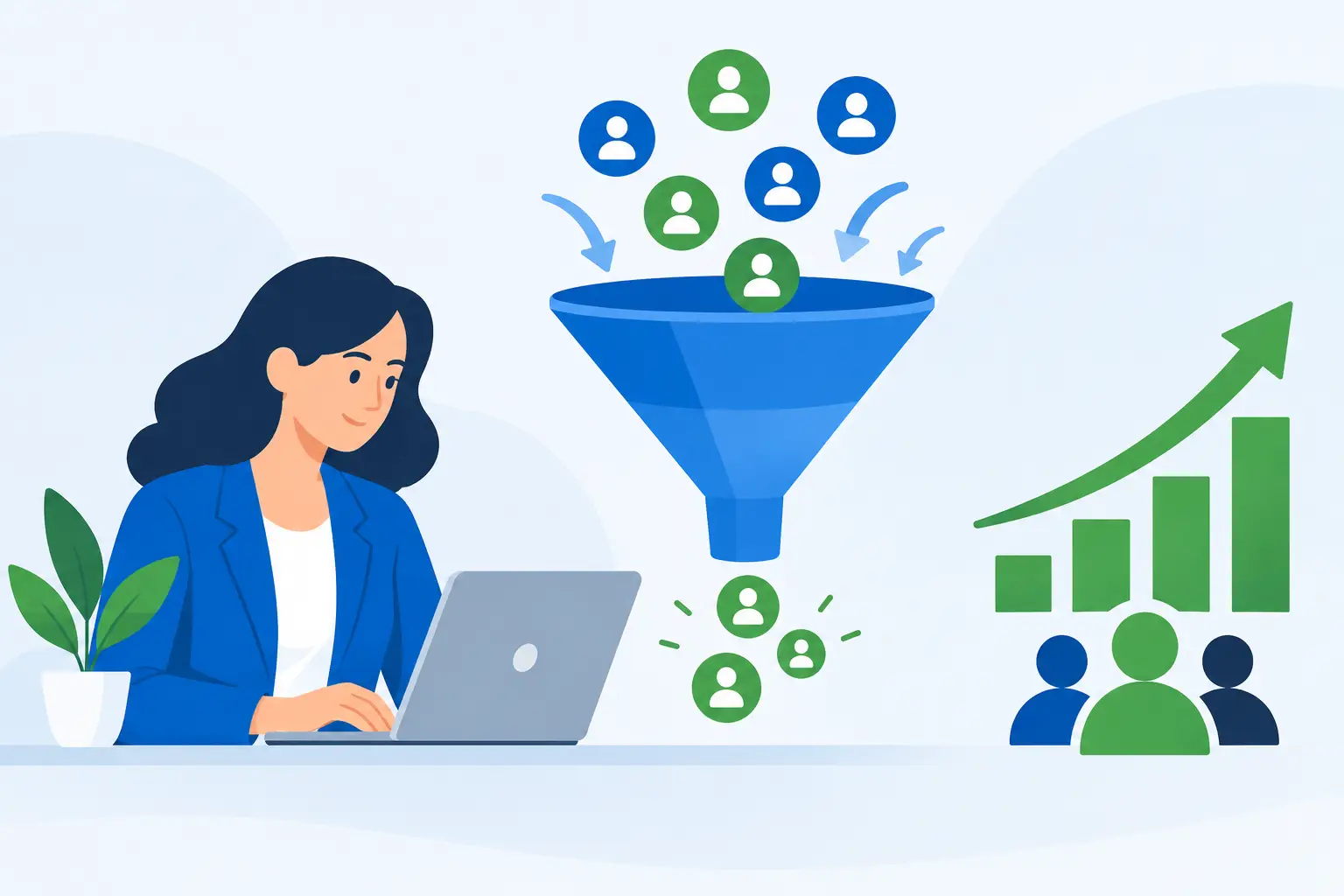
Do not rebuild the entire account because one month disappointed you. Diagnose the funnel in order.
First, confirm tracking against actual leads and appointments. Next, review search terms, locations, and device performance to remove obvious waste. Then compare each ad group with its landing page and offer. Finally, measure response times and close rates from lead to sale.
This sequence matters because it prevents random optimization. A poor landing page can make good keywords look bad. Weak follow-up can make good landing pages look bad. Bad tracking can make everything look better than it is.
At Nils Digital, we look at the full client-acquisition path because profitable Google Ads are never just an ad-account project. The question is not whether Google generated a click. The question is whether that click became a customer at a cost your business can support.
A campaign does not need to be flashy to work. It needs clean intent, a credible offer, a page built for action, accurate measurement, and a team that responds like the lead matters. Ready to turn your website and Google Ads into a client-getting system? Book a free strategy call with Nils Digital.