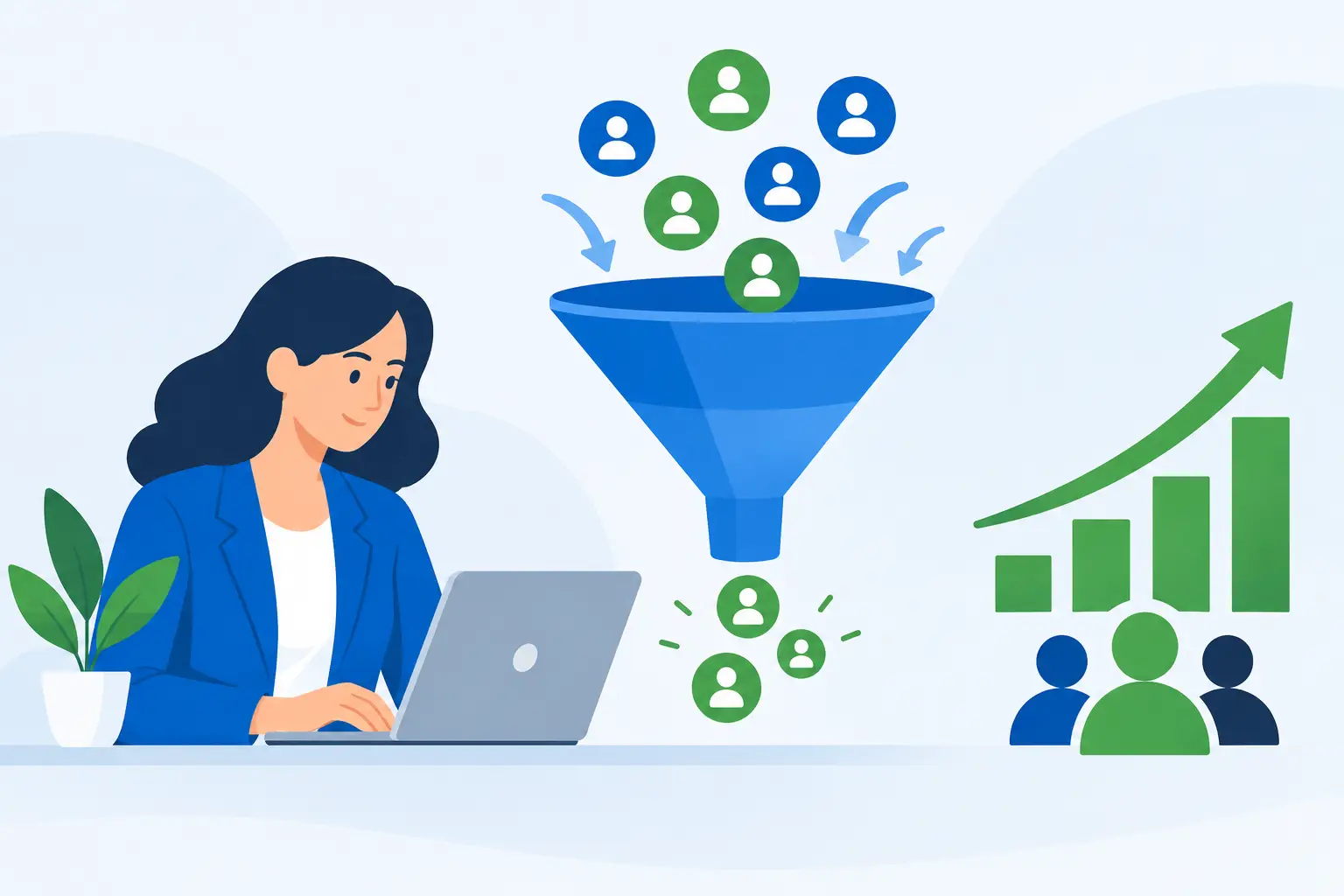
Why Are Leads Not Booking? Fix the Real Leak
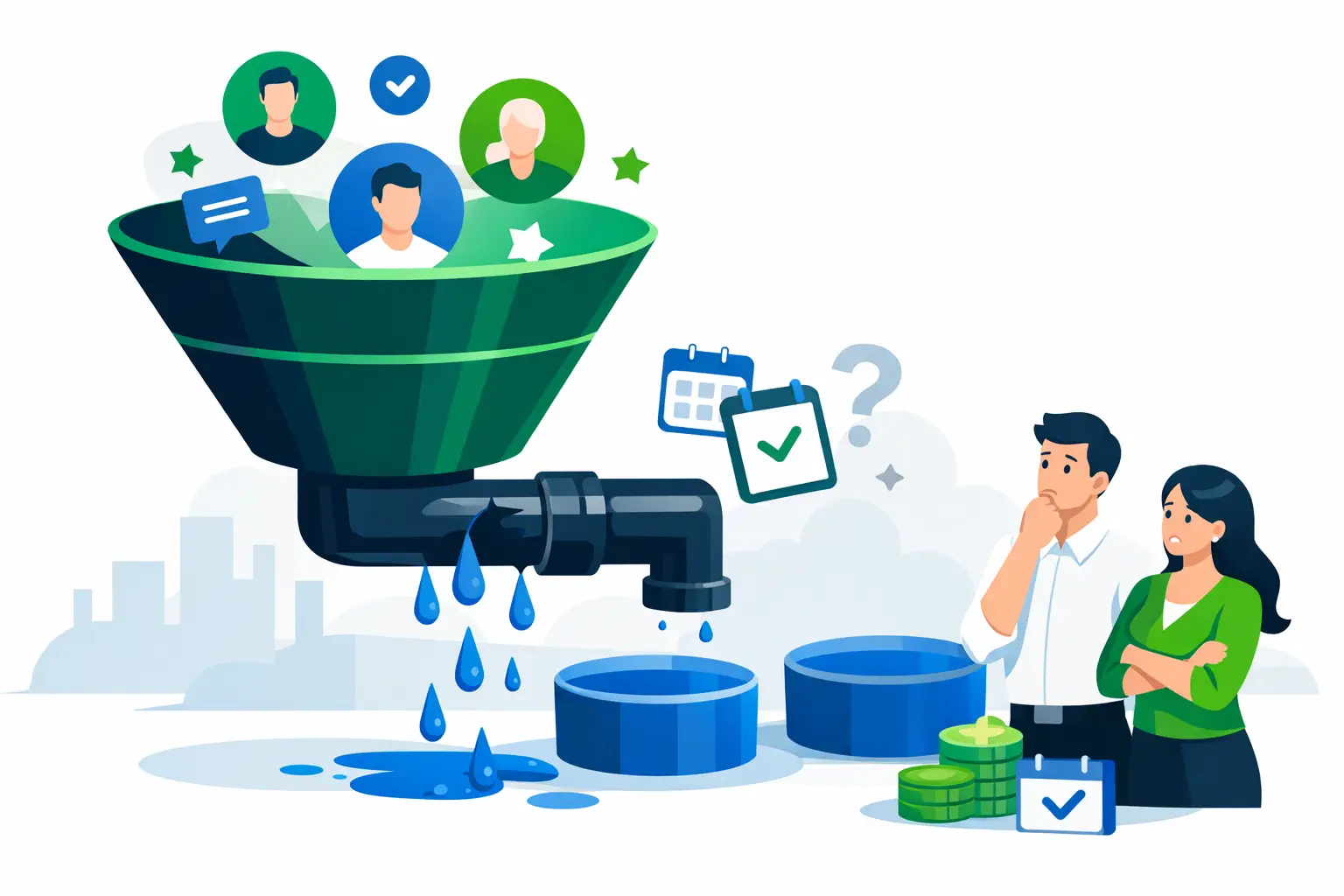
A lead fills out your form at 10:14 a.m. Your team calls at 3:30 p.m. They do not answer. By then, they have likely called two competitors, received one text back, and booked an estimate elsewhere. If you are asking, why are leads not booking, the answer is rarely that you need more leads. More often, you are paying to send good prospects into a process that makes it hard to take the next step.
That is expensive. A business spending $5,000 per month on Google Ads does not need a dramatic conversion problem to lose real money. If 40 qualified leads come in and just five more of them book, the added revenue can outweigh the entire ad budget. The math changes fast when the average job, client, or case is worth thousands.
The goal is not to pressure every inquiry into a meeting. Some leads are not a fit. The goal is to identify where qualified buyers lose confidence, get delayed, or hit unnecessary friction before they book.
Why are leads not booking from your funnel?
Most booking failures happen before a salesperson ever has a real conversation. Owners tend to blame the ad, the market, or lead quality because those are easy explanations. But the leak is often closer to home: the offer is unclear, the follow-up is slow, or the booking path asks too much from someone who is still deciding whether to trust you.
A high-intent prospect is not looking for a marketing experience. They want a fast answer to three questions: Can you solve my problem? Are you credible? What happens if I contact you? If your website, ads, and response process do not answer those questions quickly, they move on.
The offer is too broad to create urgency
"We provide quality service" does not give someone a reason to book. Neither does a page that lists every service you offer without making a clear recommendation about what the prospect should do next.
Specificity converts because it reduces decision fatigue. A commercial cleaning company may get more appointments by leading with "Get a site walk and fixed monthly quote within 24 hours" than by leading with a general claim about dependable cleaning. A law firm may convert more consultations by explaining who qualifies, what the initial call covers, and what documents to have ready.
This does not mean every offer needs a discount. In many service businesses, discounts attract poor-fit leads. A stronger move is to make the first step valuable and concrete: an assessment, estimate, strategy call, eligibility review, or on-site evaluation with a defined outcome.
Your landing page makes prospects work too hard
A paid lead should land on a page built to produce one action. If they arrive from a Google search for emergency HVAC repair and land on a generic homepage with seven navigation choices, a long company history, and no clear appointment option, you have created friction at the exact moment intent is highest.
The page needs to match the search that brought them there. The headline should confirm they are in the right place. The copy should address the specific problem. Proof should be relevant. The call to action should be visible before someone has to scroll through a wall of text.
Trust matters even more for high-ticket or sensitive services. Show real reviews, credible results, licenses where relevant, response expectations, and a clear explanation of the process. Do not hide behind stock photos and vague claims. People booking a $10,000 project or discussing a medical, legal, or financial problem are evaluating risk, not just price.
The form creates unnecessary resistance
Every form field is a small tax on conversion. Asking for a name, phone number, email, and a brief description may be reasonable. Asking for a budget, address, company size, preferred date, insurance information, and a detailed project scope before anyone speaks to them can cut form completions sharply.
There is a trade-off here. Short forms bring in more inquiries, including some weak ones. Longer forms can improve qualification but reduce volume. The right answer depends on your capacity, sales cycle, and average client value. But if your team has room for more appointments, do not use the form as a gatekeeper.
For local service businesses, phone-first options matter too. Some prospects want to call now, especially for urgent work. Make the number prominent and ensure it is answered or routed properly. A tracking number that rings into voicemail after business hours is not a lead-generation system.
The first five minutes decide more than most teams realize
Speed to lead is where good campaigns quietly die. A prospect who submits an inquiry is actively shopping. Their attention is not reserved for your business. The longer you wait, the more likely they are to contact someone else, get pulled back into work, or decide the problem can wait.
A practical standard is immediate confirmation, followed by human contact as quickly as possible during business hours. That first message should not be a generic "we received your inquiry." It should set an expectation: who will contact them, when, and what they can do now to book.
For example: "Thanks for reaching out about your kitchen remodel. A project advisor will call within 10 minutes. If you prefer, choose a time here for a 15-minute planning call." That is clear, useful, and gives the prospect control.
If your staff cannot respond quickly every time, automate the handoff. A simple system can send the confirmation, alert the right person, create the lead in your CRM, and trigger follow-up if no appointment is booked. Automation should support a real sales process, not replace it with robotic messages.
We have seen businesses spend heavily to generate leads while relying on inbox checks, sticky notes, and memory to follow up. That is not a personnel issue. It is an operating system issue. When one missed notification can cost a $5,000 client, the cost of fixing the workflow is easy to justify.
Your follow-up is too weak or ends too early
One call and one email is not follow-up. It is an attempt.
Many qualified prospects do not book immediately because they are busy, comparing options, waiting for a spouse or partner, or unsure what the next conversation will involve. They may still want your service. They simply need a clear reason and an easy path to re-engage.
Build a follow-up sequence around usefulness, not nagging. Confirm the request, offer two appointment options, answer a common objection, and remind them what they receive by booking. Use calls, text messages, and email based on the permission you have and the expectations of your market.
The sequence should also stop intelligently. Someone who says they hired another provider should be marked accordingly. Someone who asks for a call next month should not receive daily reminders. The point is disciplined persistence, not noise.
Your team is qualifying instead of booking
This is common in businesses with experienced staff. A new lead calls, explains their situation, and the team member starts diagnosing, pricing, and screening before securing the appointment. The conversation becomes long, inconsistent, and easy to abandon.
For most service businesses, the first interaction has one job: get the right prospect to the right next step. That may be a consultation, estimate, site visit, or discovery call. Your team needs a simple script that confirms the problem, establishes fit, explains the next step, and asks for the booking.
Do not confuse qualification with interrogation. You need enough information to route the lead correctly. You do not need to solve the entire problem in a three-minute inbound call.
Measure the booking leak before buying more traffic
You cannot fix this by guessing. Track the journey from click to booked appointment, then from appointment to sale. At a minimum, know your landing-page conversion rate, lead response time, contact rate, booking rate, show rate, and close rate.
A 10% to 20% website conversion rate can be realistic for a focused, high-intent service funnel, but it depends on the traffic source, offer, and service category. A lower number is not automatically a failure. What matters is where the economics break. If leads are converting but not booking, do not immediately rebuild the website. Start with response speed, call handling, calendar availability, and follow-up.
Review actual calls and messages. Read the form submissions. Look at leads that booked versus those that disappeared. Patterns show up quickly: prospects ask the same unanswered question, calls go unreturned at lunch, the calendar has no near-term availability, or the form confirmation sends no next step.
That is where ROI-first marketing differs from activity-first marketing. We do not celebrate clicks, impressions, or a full inbox. We care whether the process produces booked conversations with people your business can actually serve.
A good service deserves more than a prettier website or a larger ad budget. It deserves a funnel that treats buyer intent like the valuable asset it is. Fix the leak closest to the money first, then scale what is already working.
Ready to turn your website and lead flow into a client-getting machine? Book a free strategy call at nilsdigital.com/marketing.