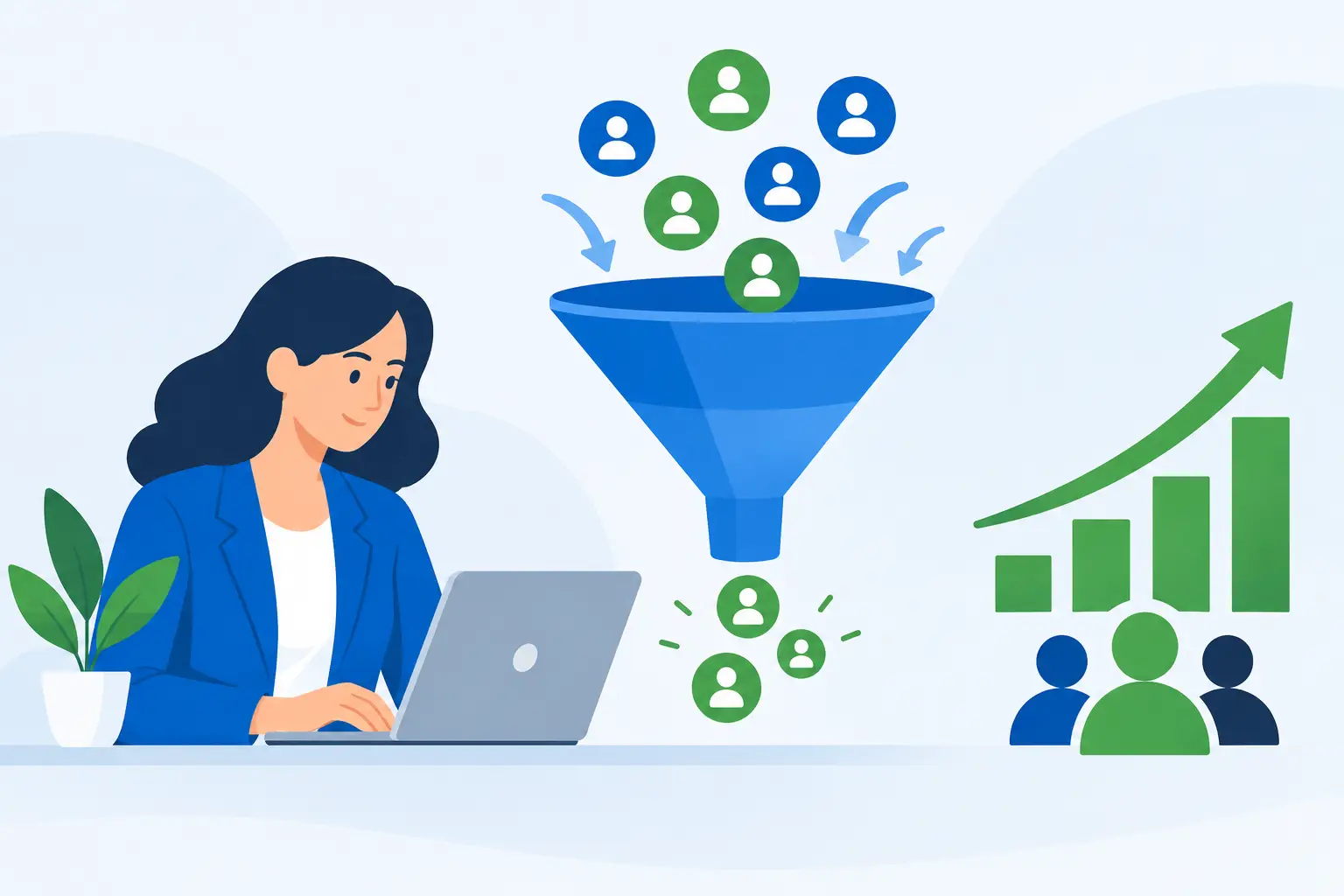
Website Funnel Versus Full Website Comparison
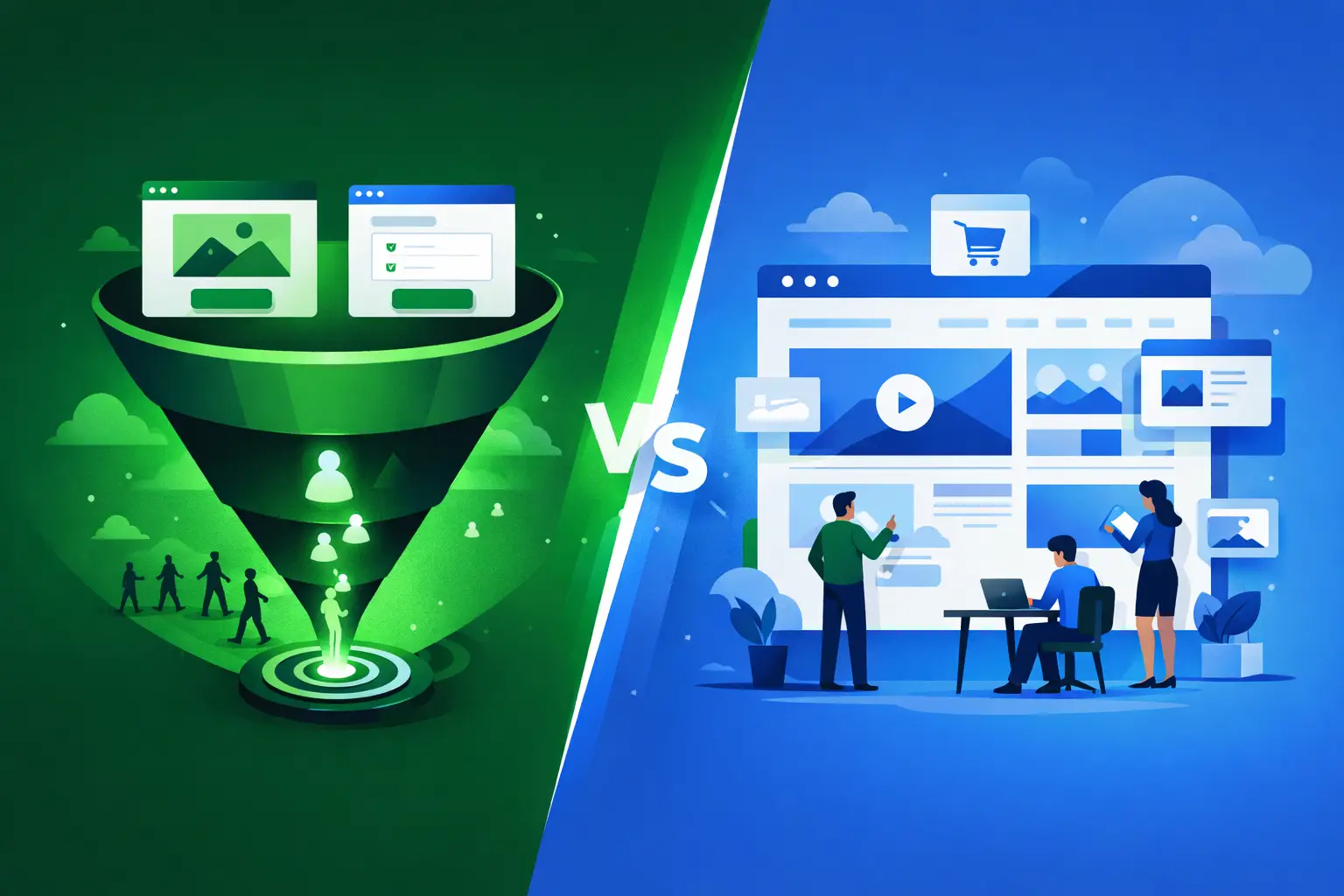
A website funnel versus full website decision is not a design preference. It determines whether your advertising budget produces booked calls or pays for visitors to browse, get distracted, and leave. For a service business buying Google Ads, every extra click, menu item, and vague message can lower conversion rates and raise your cost per lead.
The right answer depends on how people find you and what action you need them to take. A full website builds trust across many services and audiences. A funnel concentrates attention around one offer, one problem, and one next step. Neither is automatically better. But using the wrong one for paid traffic is an expensive mistake.
Website Funnel Versus Full Website: The Core Difference
A full website is your digital business location. It usually includes a homepage, service pages, team information, reviews, FAQs, case studies, contact details, and sometimes resources or location pages. Its job is to answer the broad question: “Why should I trust this company, and can it help me?”
A website funnel is a focused conversion path. A prospect lands on one dedicated page after clicking an ad, sees an offer matched to the search they made, understands the outcome, reviews proof, and takes one action: call, request an estimate, book a consultation, or submit a qualifying form.
Think about a local clinic advertising a specific treatment, an accounting firm promoting a tax-resolution consultation, or a remodeling company seeking kitchen renovation estimates. The person clicking that ad is not asking for a tour of the business. They are trying to solve a defined problem. A focused funnel lets the business answer that problem immediately.
That focus is why funnels often outperform general websites for paid acquisition. They remove competing paths and make the next step obvious. A full website may offer seven services, four locations, a blog, career openings, and social links. All of that can be useful. It can also give a paid visitor ten ways to avoid becoming a lead.
When a Full Website Is the Better Investment
A full website earns its place when your business needs to establish depth, credibility, and discoverability across more than one service or market. If you provide commercial litigation, medical services, managed IT, or multiple home-service categories, prospects may need time to evaluate your expertise before they contact you.
It also matters for organic search. Google needs clear pages that explain what you do, where you do it, and why you are qualified. A complete site gives you room to build authority for service-specific and location-specific searches. A single funnel page cannot credibly carry the entire burden for a business with a broad offering.
Full websites work well when referrals are a major source of leads, too. Referred prospects often visit your site to validate a recommendation. They want to see who is behind the company, whether you serve their area, what the process looks like, and whether your experience matches their situation.
The trade-off is that a full website should not be built as a digital brochure. If it has no clear calls to action, weak service pages, slow load times, or generic copy, it will not generate demand just because it has more pages. More information is not the same thing as more conversions.
When a Website Funnel Is the Better Choice
A funnel is usually the smarter first move when you have a defined offer and need leads now. It is particularly effective for Google Ads because it can match the visitor’s search intent from keyword to ad to page to form.
Someone who searches “emergency water damage restoration near me” has a different mindset from someone who searches “best restoration company.” The first person needs speed, availability, and a direct phone number. The second may need more proof and comparison points. A good funnel reflects that difference instead of sending both visitors to a generic homepage.
For service businesses, a high-converting funnel typically does four jobs quickly. It states the service and location clearly, shows a credible reason to choose you, reduces perceived risk with proof, and asks for one practical next step. That proof may include reviews, certifications, response-time commitments, before-and-after work, pricing context, or a clear explanation of what happens after the form is submitted.
The funnel does not need to be flashy. It needs to make the financial exchange clear. If a prospect gives you their contact information, what do they get and how soon do they get it? “Get in touch” is weak. “Book a 15-minute tax relief review” or “Request a same-day repair estimate” gives the visitor a reason to act.
At Nils Digital, we see the biggest gap when a business runs ads to a homepage built for everyone. Paid traffic needs a deliberate path. When the offer, ad copy, landing page, follow-up, and sales response work together, conversion rates in the 10% to 20% range become a realistic operating target for many qualified service campaigns. The exact number still depends on demand, competition, offer strength, and how quickly your team responds.
The Cost of Sending Paid Traffic to the Wrong Page
Here is the math most businesses miss. Suppose you spend $3,000 per month on Google Ads and pay $15 per click. That buys 200 visitors.
At a 3% conversion rate, you get six leads. Your cost per lead is $500. At a 12% conversion rate, you get 24 leads from the same traffic and your cost per lead falls to $125. You did not need more clicks. You made more of the clicks you already purchased.
That does not mean every business needs a standalone funnel for every service. Building too many pages too early can spread your budget and attention thin. It means your highest-value campaigns deserve a landing experience designed around the specific action you are paying to generate.
The other hidden cost is lead quality. A vague website can attract broad inquiries from people who do not understand your minimum project size, service area, timeline, or pricing range. A well-built funnel can qualify prospects before they submit. Asking the right questions and setting clear expectations protects your team from wasting time on leads that were never a fit.
The Best Setup Is Often Both
For most established service businesses, this is not really a choice between a website funnel and a full website. The strongest setup is a full website as the trust and search foundation, with focused funnels for campaigns that need measurable acquisition.
Your website can house your complete story: services, expertise, locations, proof, and company credibility. Your funnel can handle the campaign: one offer, one audience, one conversion event, and one scorecard. This lets you test performance without constantly rebuilding the entire site.
For example, a law firm may maintain a full site for its practice areas while running separate funnels for personal injury consultations, business litigation assessments, and estate planning appointments. A home-services company may use its main site to rank across its service area, then send paid searches for HVAC replacement, drain cleaning, and emergency repairs to dedicated pages.
The key is measurement. Track calls, forms, booked appointments, qualified leads, closed revenue, and cost per acquired client. If you only track clicks or form submissions, you can easily scale a campaign that looks busy but loses money.
How to Decide What You Need First
Start with the business outcome, not the technology. If you need to improve credibility across several services, strengthen organic visibility, or support referral traffic, fix the full website foundation. If you have a proven service, a clear target market, and budget for paid traffic, build a funnel around the offer that produces the most profitable clients.
Ask three blunt questions. What service creates the best margin? What problem are prospects actively searching for? Can your team answer a qualified lead quickly enough to convert it? If you cannot respond within minutes during business hours, more leads may simply create a more expensive bottleneck.
Do not let a designer, software vendor, or agency sell you a website based on pages, animations, or a vague promise of “brand awareness.” Ask what action the site is designed to produce, how it will be measured, and what happens after a lead comes in. If they cannot connect the build to revenue math, you are buying decoration.
A good website should make your business easier to trust. A good funnel should make your next client easier to acquire. Build the one that fixes your most expensive problem first, then measure it hard enough to know whether it is working.
Ready to turn your website into a client-getting machine? Book a free strategy call at nilsdigital.com/marketing.