How to Build a Service Business Funnel
Most service businesses do not have a lead problem. They have a funnel problem. Traffic comes in, a few people call, some fill out a form, staff follows up inconsistently, and revenue ends up depending on luck more than process. If you want to know how to build service business funnel systems that actually produce clients, start by fixing that gap.
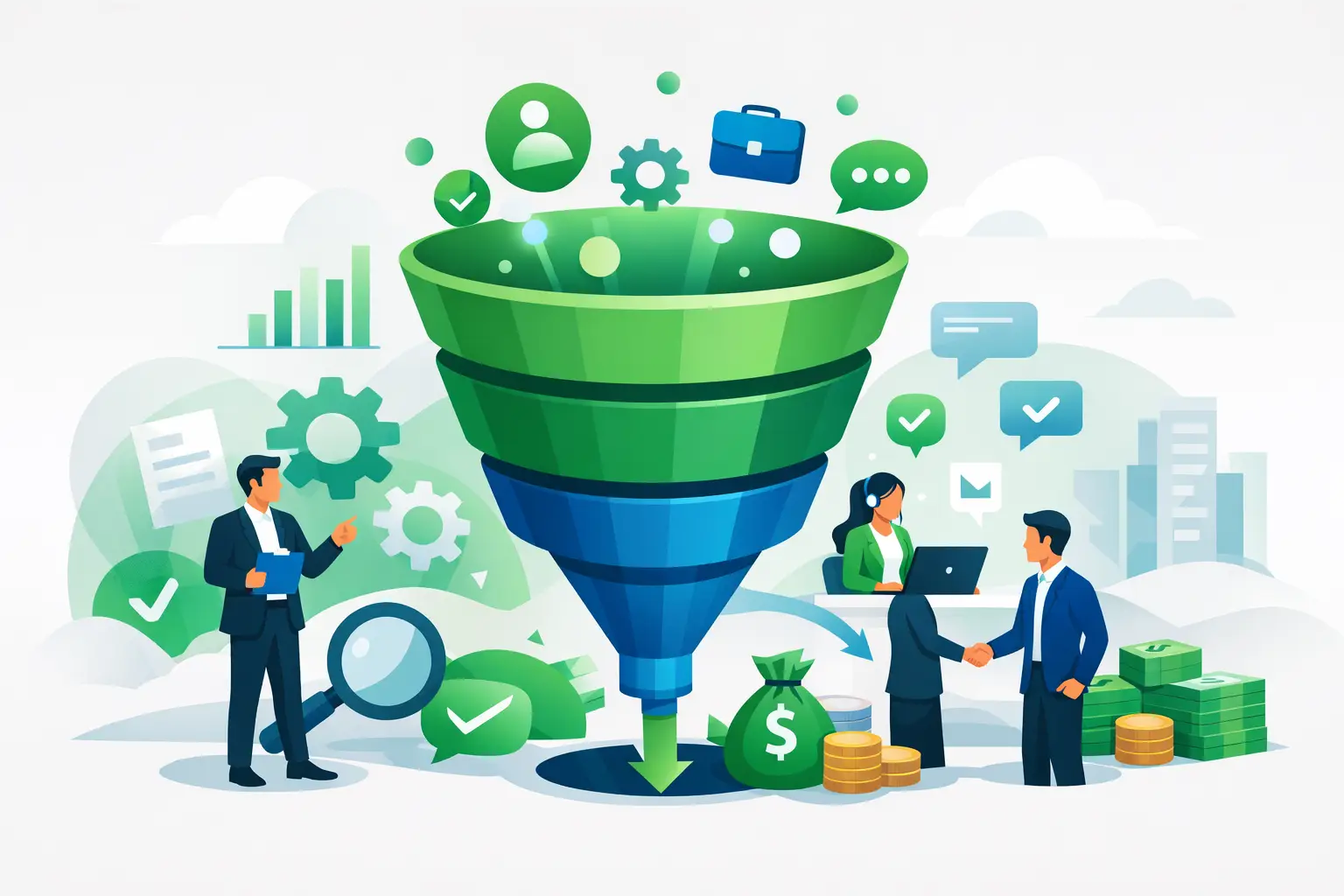
A real funnel is not just a website with a contact form. It is the full path from first click to signed client. For a local service business, that usually means ad or search traffic, a focused landing page, a clear offer, a friction-free way to book, fast follow-up, and a sales process that closes. Miss one piece and the whole thing underperforms.
The good news is that service funnels are usually simpler than owners think. The bad news is they demand discipline. You cannot send every visitor to a generic homepage, answer leads three hours later, and expect premium clients to line up.
What a service business funnel actually needs
If you are figuring out how to build a service business funnel, think in terms of stages instead of pages. A strong funnel has four jobs.
First, it has to attract the right traffic. That means people who already have intent, not random visitors who may never buy. For most local and service-based companies, high-intent search traffic is the best starting point because the person is actively looking for a solution.
Second, it has to convert that attention into a next step. Not a vague "learn more." A booked call, a request for quote, a consultation, or a diagnostic. The call to action has to match how your buyers make decisions.
Third, it has to qualify the lead without creating too much friction. If you ask for twenty fields, conversions drop. If you ask for nothing, your team wastes time on bad fits. There is a balance.
Fourth, it has to move the lead into a sales conversation quickly. In service businesses, speed matters more than most owners admit. A lead contacted in five minutes is dramatically more valuable than one contacted the next day.
Start with the economics before the design
Most funnel advice starts with headlines and button colors. That is backward. Before you build anything, run the math.
Know your average job value, close rate, lead-to-call rate, and customer acquisition target. If a new client is worth $3,000 and your close rate from qualified calls is 30%, you can back into what a lead and booked call are worth. That tells you how aggressive you can be with traffic and how much friction your funnel can tolerate.
This is where many service businesses make expensive mistakes. They copy a funnel structure from another industry without checking whether the numbers support it. A med spa, a law firm, and a roofing company do not need the same funnel. The buying cycle, urgency, and trust requirements are different.
If you cannot explain your funnel in dollars, not just design terms, you are building on guesswork.
How to build a service business funnel from the top down
The cleanest way to build a funnel is to start at the conversion event and work backward.
Step 1: Define the single primary offer
A funnel performs best when it sells one clear next step. For service businesses, that is usually a free consultation, estimate, inspection, strategy call, or case review. Pick one.
Trying to push visitors toward five different actions creates hesitation. If your page asks people to call, email, download a guide, browse services, read blog posts, and follow you on social media, conversion suffers.
Your offer also needs a reason to exist now. Convenience alone is weak. Specificity converts better. "Book a free 15-minute strategy call" works better than "Contact us." "Get a same-day estimate" is stronger than "Request information."
Step 2: Match traffic to intent
Not all traffic belongs in the same funnel. Someone searching for "emergency plumber near me" needs a very different experience than someone searching "how much does plumbing repipe cost."
High-intent searches should land on pages built for action. Mid-intent searches may need more proof and education. Low-intent traffic from broad awareness campaigns often produces cheap clicks and expensive disappointment.
If you are early, keep it simple. Start with one service, one market, and one traffic source. Narrow beats broad because it lets you find conversion problems faster.
Step 3: Build a landing page that answers buying questions fast
A high-converting service page is not clever. It is clear. Within a few seconds, the visitor should know what you do, who you do it for, where you operate, and what happens next.
Most service pages need a strong headline, a short promise, trust markers, a visible call to action, and enough detail to reduce doubt. Reviews, certifications, years in business, response times, and before-and-after outcomes matter because service buyers are judging risk.
They are not just asking, "Can this company do the work?" They are asking, "Will this be a hassle, will I get burned, and will someone actually call me back?"
Long pages can work well for expensive or trust-heavy services. Shorter pages often work for urgent services. It depends on the buying context. If the buyer needs immediate help, reduce reading and increase action. If the buyer is evaluating a major investment, earn the click with proof.
Step 4: Reduce booking friction
This is where good funnels quietly outperform average ones. Make the next step easy.
If calls are your best close path, put the number in a prominent position and make sure someone answers. If booked appointments are better, use a scheduling flow that asks only what your team truly needs. Name, contact info, service type, and maybe location are usually enough to start.
Every extra field is a tax on conversion. Some qualification is useful. Too much feels like work.
Step 5: Follow up like revenue depends on it
Because it does.
Most service companies lose leads after the form, not before it. The website gets blamed for a sales follow-up problem. If a lead submits at 2:04 PM and hears back at 6:30 PM, your funnel is not broken at the top. It is broken in the middle.
Set immediate confirmation messages, instant alerts, and a follow-up standard your team can actually maintain. Fast response wins deals, especially in competitive local markets.
At Nils Digital, this is one of the most common leaks we see. Businesses pay for clicks, generate leads, and then let response time erase the return.
The most common funnel mistakes service businesses make
The first is sending paid traffic to the homepage. Homepages try to serve too many audiences at once. A funnel page should do one job.
The second is weak positioning. If your page sounds like every other provider in town, the buyer defaults to price. A better funnel makes the difference obvious. Faster response. Better guarantee. More specific expertise. Cleaner process.
The third is poor lead handling. Even strong pages fail when no one owns speed to lead, qualification, and booking.
The fourth is measuring the wrong numbers. Click-through rate matters less than qualified call rate. Form submissions matter less than signed clients. Many owners optimize for activity instead of revenue.
What to measure if you want the funnel to improve
You do not need a giant dashboard. You need the few numbers that show where money is leaking.
Track traffic volume, landing page conversion rate, booked call rate, show rate, close rate, and cost per acquired customer. If one stage is weak, fix that stage before redesigning the whole system.
For example, a page converting at 12% might look great until you realize only half the leads are qualified. Or a page converting at 6% might be highly profitable if the leads close at a high rate. Context matters.
This is why ROI-first operators obsess over full-funnel math. A pretty page that attracts bad leads is not a win. A simpler page that books fewer but better calls often is.
Build the funnel around trust, not hype
Service buyers are skeptical for good reason. They have been ignored, oversold, and burned before. Your funnel has to lower perceived risk.
That means using real proof, clear process, honest claims, and a straightforward next step. Avoid inflated promises unless you can back them with actual delivery. The fastest way to damage conversion is to sound like marketing.
A good service funnel feels operationally credible. It shows that your business is organized, responsive, and used to solving this exact problem. That is what gets serious buyers to raise their hand.
If you are building from scratch, do not try to make it perfect on day one. Build a narrow funnel for one service, one audience, and one offer. Get the numbers. Improve the weakest step. Then scale.
That is how service businesses grow without wasting months on redesigns and thousands on traffic that never had a chance to convert.
Ready to turn your website into a client-getting machine? Book a free strategy call at nilsdigital.com/marketing.