How to Build a Local Service Funnel That Pays
A local service business can be excellent at the work and still lose the job before the phone rings. The reason is usually not demand. It is the gap between someone searching for help and your business giving them a clear reason to contact you now. Learning how to build a local service funnel closes that gap with a system built to produce booked appointments, qualified estimates, and measurable revenue.
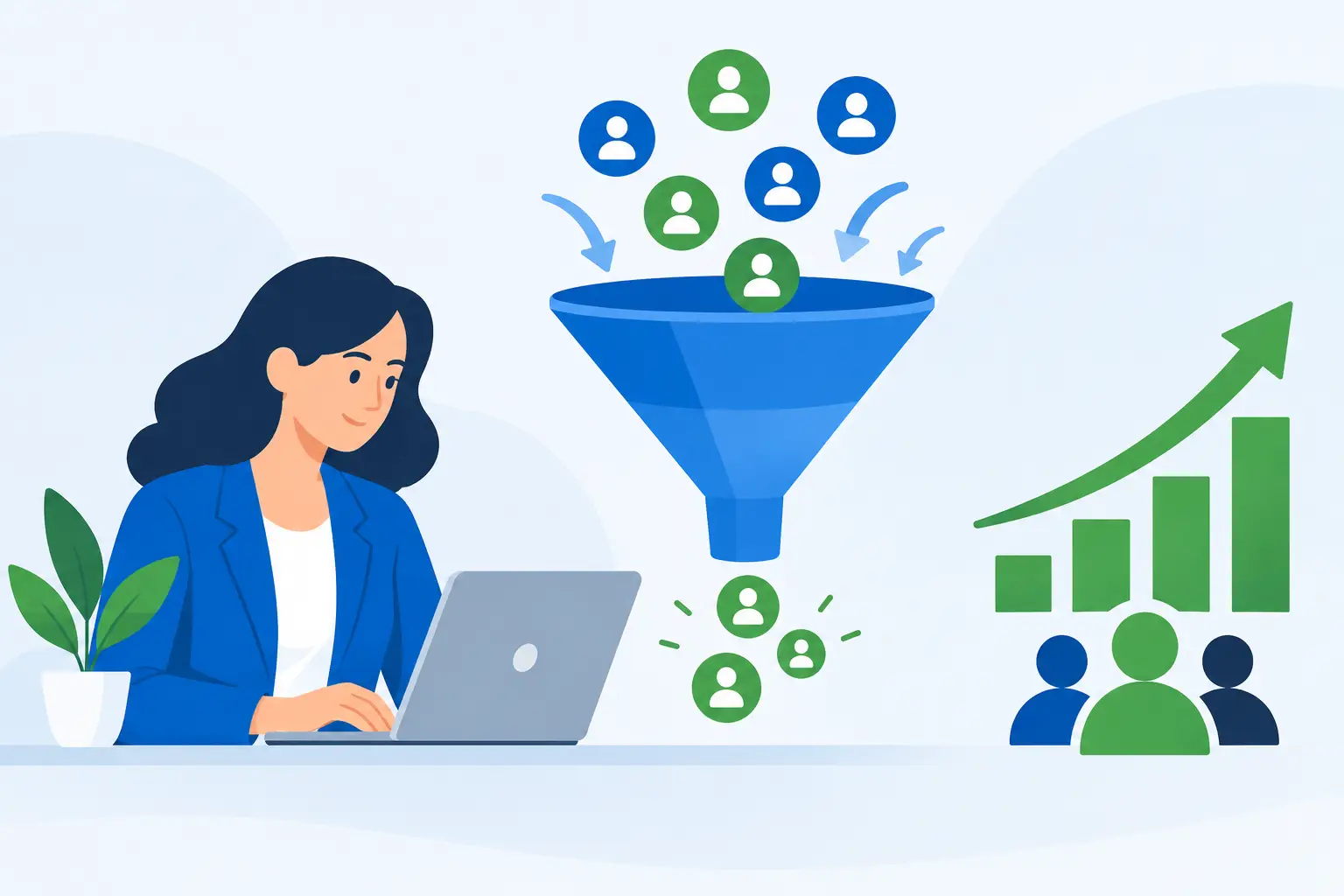
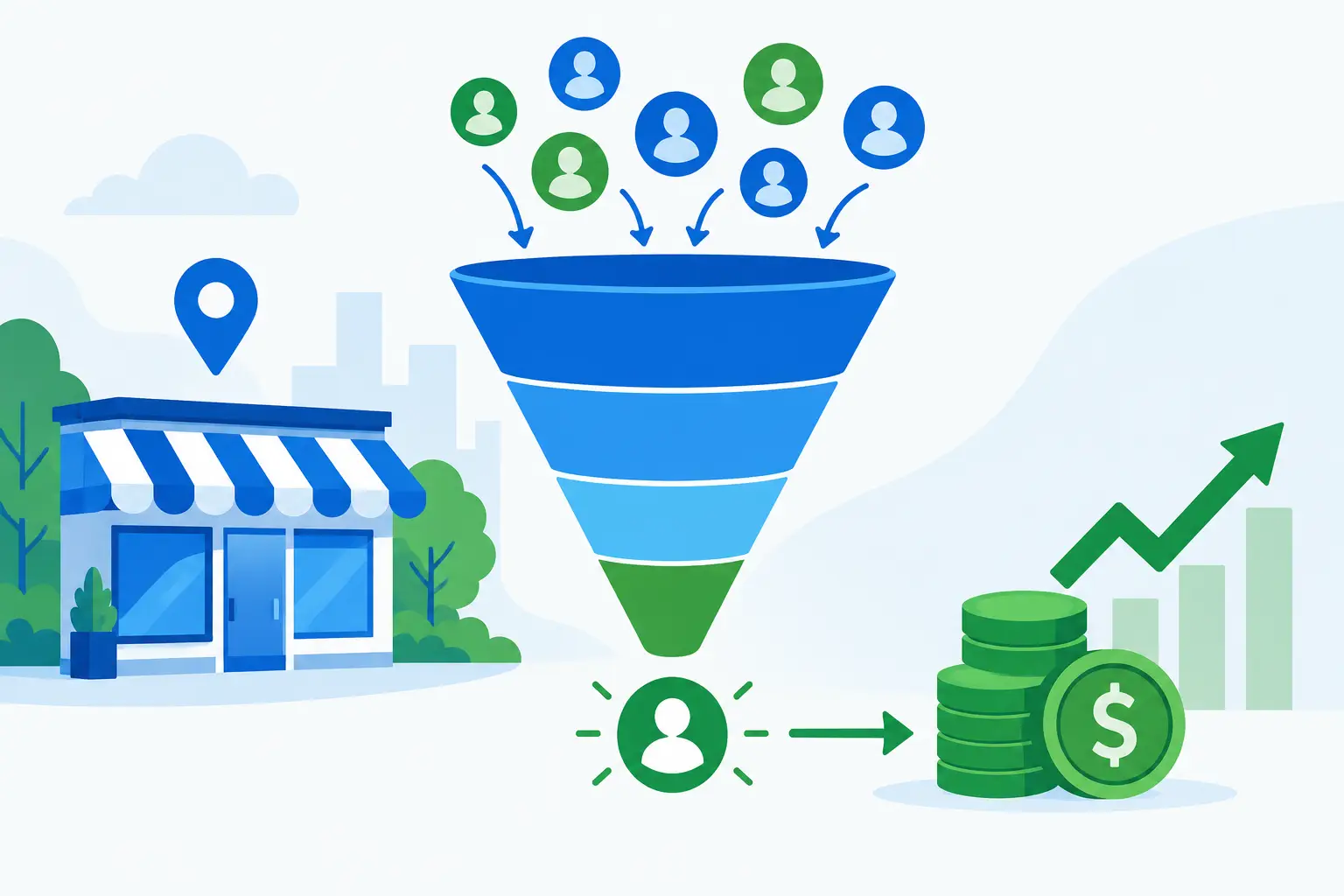
A funnel is not a prettier website, a pile of social posts, or a Google Ads account left on autopilot. It is the complete path from intent to action: the search, the ad or listing, the landing page, the call or form, the follow-up, and the booked job. Every step either moves a prospect forward or gives them a reason to choose the next company.
For a plumber, clinic, law firm, restoration company, HVAC contractor, or local professional service, the goal is simple: make it easy for the right customer to take the next step and hard for leads to fall through the cracks.
Start With the Economics, Not the Design
Most local funnels fail because they are designed around what the owner wants the site to say, not what the business can afford to pay for a client. Before you write a headline or buy a click, work backward from the numbers.
Start with your average customer value, gross margin, close rate, and capacity. If an average job produces $1,500 in gross profit and one out of every three qualified estimates closes, a qualified estimate can be worth roughly $500 in gross profit before sales overhead. That tells you what you can reasonably spend to create that estimate.
The math changes by business model. A dentist may accept a higher acquisition cost for a patient with recurring treatment value. An emergency locksmith needs calls immediately and may value speed above lead volume. A remodeling company may tolerate a longer sales cycle but needs to filter out tiny jobs that drain estimator time.
Do not use one vanity target like “more leads.” Set a target for profitable leads. If a campaign generates 40 inquiries but only six are serviceable, the real problem is not lead generation. It is qualification.
Choose One High-Value Offer and One Clear Audience
A local service funnel works best when it gives a specific person a specific reason to respond. “We provide quality service” is not an offer. Every competitor says some version of it.
Your offer should match the moment that causes someone to search. An urgent service may lead with same-day availability. A high-trust service may lead with a clear consultation, documented process, financing option, or proof of specialized experience. A commercial provider may lead with a site assessment that identifies costly compliance or operational risks.
Be careful with discounts. A $99 special may fill the calendar for a maintenance business, but it can also attract price shoppers who never become worthwhile customers. In many cases, speed, certainty, and trust are stronger than a cheap introductory offer.
Then narrow the audience. Separate residential from commercial. Separate emergency work from planned projects. Separate high-margin services from low-margin work. Sending every visitor to one generic page forces them to do the sorting themselves. They will often leave instead.
Build the Funnel Around Search Intent
Local customers rarely wake up wanting to browse a brand. They search because they have a problem, a deadline, or a decision to make. Your funnel should meet that intent directly.
For high-intent Google Ads traffic, send the visitor to a dedicated landing page, not your homepage. If they searched “water heater repair near me,” the page should immediately confirm that you repair water heaters in their service area, explain what happens next, show why they can trust you, and make calling or booking obvious.
A strong local landing page has a few non-negotiables: a direct headline tied to the service, a visible phone number, a primary call to action, proof that the business serves the visitor's area, and evidence that reduces risk. That evidence can include reviews, credentials, years in business, warranties, before-and-after work, or a concise explanation of your process.
Do not bury the action below a long company story. The visitor should know within seconds what you do, where you do it, and how to contact you. On mobile, the call button and form should be easy to use with one hand.
Give Prospects a Low-Friction Next Step
For urgent services, a phone call is often the highest-converting action. For planned services, a short estimate request form may work better because the prospect may be comparing options outside business hours.
The key word is short. Ask only for information your team will actually use to respond. Name, contact information, service need, location, and preferred timing are enough for most initial inquiries. Every extra field creates another reason to abandon the form.
If you need more detail to qualify a project, get it after the first response. A two-step form can work well for higher-ticket services: capture the lead first, then ask follow-up questions while the prospect is engaged.
Make Trust Do the Heavy Lifting
Local service buyers are not only evaluating price. They are evaluating the risk of letting a stranger into their home, trusting them with a serious problem, or handing over a major project.
Trust needs to appear before the form. Use real reviews with specific outcomes, real team photos where appropriate, licenses and certifications that matter to buyers, clear service-area information, and guarantees you can stand behind. Generic stock images and vague claims like “best in town” do not lower risk.
Specificity wins. “We arrive in a marked vehicle, diagnose the issue, and give you the price before work begins” is more credible than “exceptional customer service.” A prospect can picture the first statement. They cannot verify the second.
This is also where many businesses create an accidental conversion leak. Their ads promise fast help, but the page gives no hours, no response expectation, and no proof anyone will answer. The message must match from click to contact.
Capture, Route, and Respond Before the Lead Cools Off
A funnel does not end when someone submits a form. That is where the expensive part begins. If you spend $80 to acquire a lead and take four hours to respond, you may be paying to feed your competitors.
Set up immediate confirmation by text or email, then route the lead to the right person. For many local businesses, an automated acknowledgment followed by a human call within five minutes is a meaningful competitive advantage. The automation confirms receipt and sets expectations. The human conversation qualifies the need, answers questions, and gets the appointment on the calendar.
Speed matters, but so does ownership. Every lead needs a named person responsible for the next action. If your office team assumes someone else called, the funnel has failed even if the ads and page performed perfectly.
Track missed calls as aggressively as form submissions. A missed call from a high-intent searcher is not just a missed call. It is paid demand that your business failed to capture.
Measure the Entire Local Service Funnel
You cannot improve what your reporting hides. A dashboard that shows impressions, clicks, and cost per lead is incomplete. Those metrics explain activity, not return.
Track the path through to revenue: ad spend, calls, forms, qualified leads, appointments, estimates, closed jobs, revenue, and gross profit. If possible, break the results down by service type, location, campaign, and lead source.
A 10% to 20% landing-page conversion rate can be realistic for focused, high-intent local traffic, but conversion rate alone is not the finish line. A page converting at 8% may be more profitable if its leads close at twice the rate. A page converting at 20% can be a disaster if it attracts people outside your service area or budget.
Review recordings and form submissions every week. Look for recurring language. Are callers asking whether you serve their town? Put the towns on the page. Are they confused about pricing? Explain your pricing process. Are low-quality leads coming from one keyword or campaign? Stop paying for them.
How to Build a Local Service Funnel Without Overbuilding It
You do not need 40 pages, six automation platforms, and a complicated nurture sequence to get started. You need one profitable service, one focused traffic source, one page built for that service, a reliable contact path, and reporting that connects leads to sales.
Build the first version quickly, then improve it with evidence. Change one major variable at a time: the offer, headline, call to action, lead form, targeting, or follow-up speed. If you change everything at once, you will not know what created the result.
The trade-off is straightforward. A simple funnel gets live faster and gives you cleaner data. A more segmented funnel can improve relevance and lead quality once you have enough traffic to justify it. Start narrow. Expand when the numbers prove the next step is worth the effort.
A good local funnel should make growth less dependent on referrals, luck, and whoever happens to answer the phone. It should show you exactly what demand costs, where revenue is leaking, and what to fix next. If we cannot tie a change to booked work or recovered profit, it is not a priority.
Ready to turn your website into a client-getting machine? Book a free strategy call at nilsdigital.com/marketing.