Holiday Gift Card Ideas for a Padel Club
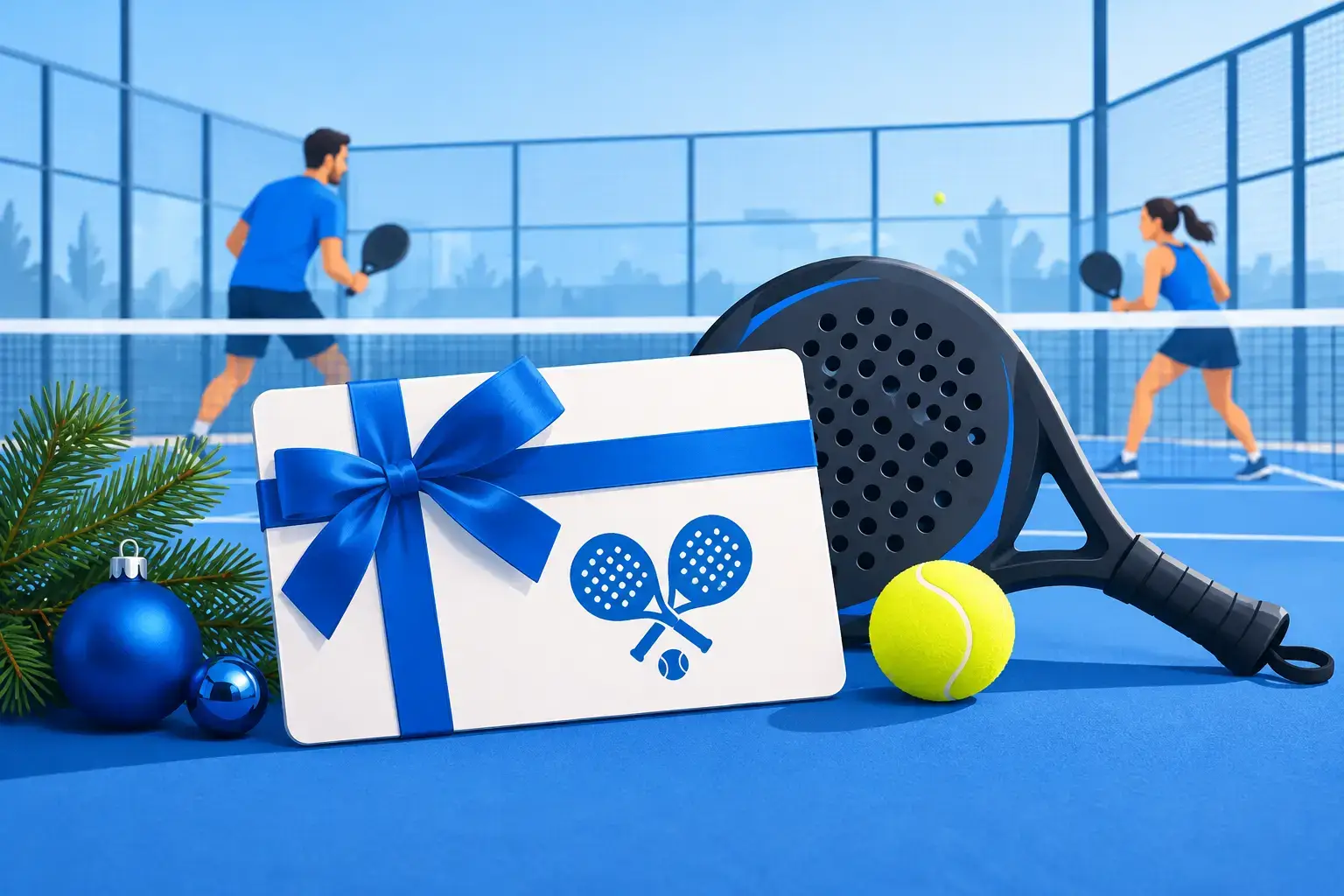
A gift card can either create cash you collect in December or create a discounted headache you manage in January. The difference is in what you sell, how you package it, and what happens after the recipient walks through the door. These holiday gift card ideas for a padel club are built to fill open court time, bring in new members, and protect the full-price revenue your club needs.
A $50 generic gift card is easy to set up, but it gives the buyer no reason to choose your club over any other local activity. A clear padel-specific offer gives them that reason. It also gives your front desk and coaches a simple answer when someone asks, “What should I buy for a player who already has everything?”
Start with the open spots you need to fill
Before creating a holiday offer, look at the next 90 days. Count unused beginner clinic spots, off-peak court hours, junior program openings, and memberships that typically cancel after the holidays. Your gift card campaign should point buyers toward those gaps.
For example, if your Tuesday and Thursday 7 p.m. beginner clinics each have six open spots, do not sell a vague “padel experience.” Sell a gift card that covers a four-week beginner series starting in January. If the series costs $160 and you sell 20 cards, that is $3,200 collected before the first class starts. More importantly, every recipient enters a program designed to create a repeat habit.
This is different from discounting a membership. A discount trains existing members to wait for a lower price. A holiday gift card lets a buyer give a specific experience without cutting the value of your core membership.
Holiday gift card ideas for a padel club
The best offers are easy for a non-player to understand. Most holiday buyers are spouses, parents, coworkers, or friends. They do not know your rating system, court booking rules, or whether a particular racket shape is right for the recipient. Give them a simple choice with a clear outcome.
Sell a beginner series, not a single lesson
A single private lesson can work for an experienced player, but it often leaves a new player stranded afterward. They learn a few fundamentals, then have no one to play with and no reason to return.
A four- or six-week beginner series is a better gift because it comes with a next step. The recipient meets players at the same level, learns the basics over multiple sessions, and has a natural path into open play or a recurring program. A karate school sees the same pattern when it sells an introductory course rather than one class. The course gives a new client enough time to build confidence and routine.
Package the card as “Start Padel in January” rather than “$160 toward programs.” Name the result, not the transaction.
Create a couples or doubles starter package
Padel is social. Use that advantage.
A doubles starter package can include two beginner clinic places and one court booking to use within 30 days of completing the clinic. A couples package can include two clinic places plus a racket demo session. You are not adding free extras for the sake of it. You are removing the two biggest reasons a new player does not return: they do not know who to play with, and they do not know what to do next.
Set limits that protect operations. For example, make the court booking valid Monday through Thursday before 5 p.m., or require it to be reserved 48 hours ahead. If your peak-time courts are already full, do not give away the hours you can sell at full price.
Offer junior camp credit at a fixed amount
For clubs with junior programming, holiday gift cards can help fill school-break camps and spring sessions. Parents often prefer a concrete dollar amount because schedules are still uncertain in December.
Use fixed credits such as $100, $200, or $300 toward a junior camp or academy program. Avoid making the card usable for every service in the club if that creates confusion at the desk. State exactly where it applies and when it expires.
A soccer academy may sell a $150 camp credit in December, then send parents a January email with three specific camp dates. The same approach works for padel. The sale happens first. The follow-up makes redemption simple before the buyer forgets about it.
Build a premium private coaching gift
Not every offer needs to be for beginners. Existing members often have a friend or partner who wants help improving quickly.
Offer a premium package with two private lessons, a video review, and a written practice plan. The buyer sees a complete gift. The coach gets a client who has committed to more than one session. The club gets a reason to introduce that client to leagues, drills, or a membership after the package ends.
This offer depends on coach capacity. If your strongest coach is already booked for six weeks, do not sell 30 cards tied to that coach. Sell a limited number, name the redemption window, and assign staff before the campaign goes live.
Make the gift card look like a real gift
Do not make buyers print an account balance from a checkout page. Use a clean digital card with the recipient’s name, the exact package, redemption instructions, and an expiration date. If you offer physical cards at the club, keep them near the front desk with envelopes ready to go.
The message on the card should answer three questions in less than 30 seconds: What did I receive? How do I redeem it? What happens next?
For a beginner series, that might read: “You received a four-week Padel Starter Series. Choose your January start date online. Bring court shoes and arrive 10 minutes early. We will place you with players at your level.” That is much more useful than a barcode and a $160 balance.
Set rules before staff starts selling
Gift cards create problems when the terms live only in one manager’s head. Put the rules in writing before the first sale.
Decide whether the card is transferable, whether it can be combined with other offers, what happens if the recipient misses a session, and whether any remaining balance can be used toward a membership. Also decide who handles expired cards. A 12-month redemption window is usually long enough for a holiday buyer while still giving your team a reason to follow up early.
Keep the policy simple. A gymnastics gym does not need five exceptions for a holiday camp credit, and neither does a padel club. More rules mean more front-desk conversations, more staff mistakes, and more revenue given away to fix avoidable confusion.
Use follow-up to turn a gift into a member
The sale is not the finish line. It is the first contact with a potential long-term member.
Send the purchaser an immediate confirmation, then send the recipient a separate welcome message within 24 hours. If the card is for a January beginner series, send a reminder seven days before the first session and another message after week two with the next available program or open-play option.
Track four numbers: cards sold, cards redeemed, recipients who buy again within 60 days, and revenue from those recipients after the original gift card value is used. If you sell 40 cards and only 22 are redeemed, you have a follow-up problem. If 35 redeem but only five continue, you likely have a program or next-step problem.
A strong gift card campaign is not about selling more certificates at the front desk. It is a controlled way to bring the right people into your club, at the right time, with a clear reason to stay. Start with one offer tied to one underfilled program, make redemption simple, and measure whether the recipient comes back.
Want more members who stay? Book a 15 minute call with Nils Digital.