Trial Class to Member Conversion That Fills Spots
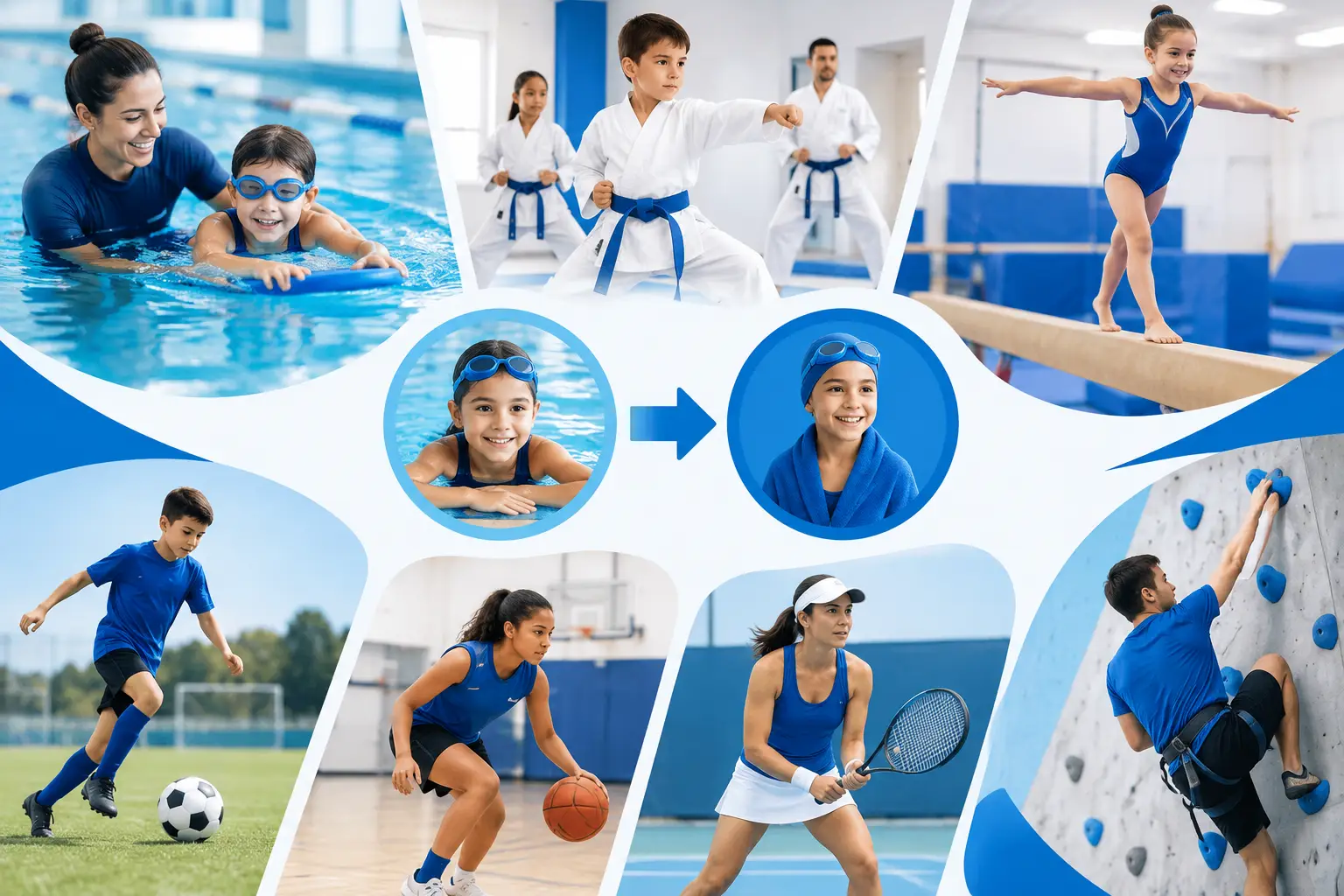
A trial class is not a tour. It is the one session where a prospect decides whether your program feels worth a recurring payment, a drive across town, and a place on their weekly calendar. Trial class to member conversion drops when the experience ends with, “Let us know if you have questions.” That leaves an open spot empty and puts your staff back in chase mode.
For most sports programs, the problem is not a lack of trial bookings. It is the gap between a good class and a clear enrollment decision. Fix that gap, and you can fill more spots without increasing ad spend or asking your coaches to become salespeople.
Start with the number that matters
Track trial-to-member conversion by program, location, coach, and age group. Do not blend every trial into one number. A swim school might convert 70% of preschool trials and only 35% of adult beginner trials. A karate school may see strong conversion from after-school trials but lose weekend leads because the next class time is inconvenient.
Use this simple calculation: members enrolled within seven days divided by completed trials. If 40 people attend a trial in a month and 18 enroll, your conversion rate is 45%.
That number tells you where money is leaking. At a monthly membership of $180, moving from 45% to 60% conversion on those same 40 trials adds six members. That is $1,080 in new monthly recurring revenue before you spend one more dollar to generate another lead.
Seven days is a practical window because interest falls fast after the class. You can also track same-day enrollment. That is the cleanest measure of whether the visit, recommendation, and checkout process worked together.
The trial needs one clear job
A trial class should answer three questions for the member or parent: Will I fit in here? Will I improve here? Can I start without creating a scheduling headache?
Many programs handle the first question well. The coach is welcoming, the class is active, and the facility looks organized. Then the prospect leaves without a specific placement, start date, or registration link. The hard part gets pushed to later, when the parent is in the parking lot, at work, or comparing three other options.
Give every trial a defined next step before it begins. For a gymnastics gym, that might be: “If this level is right, we will hold your Tuesday 5:00 p.m. spot until tomorrow at noon.” For a soccer academy, it could be: “After training, the coach will tell you which development group fits and when the next six-week block begins.”
That is not pressure. It is operational clarity. A prospect should not have to decode your class levels, search a schedule, or wait for someone to return a call to join.
Match the trial to the real class
Do not place a 7-year-old soccer player in a trial that is far below or above their ability simply because it has space. A poor placement can make a strong program look disorganized. The same applies to a swimmer who needs water comfort but is dropped into stroke development, or a new martial arts student who attends an advanced mixed-age class.
Ask two or three placement questions before the visit. Age, prior experience, and goal are usually enough. For swimming, ask whether the child can put their face in the water and float independently. For tennis, ask whether the player has taken lessons before and whether they want social play, skill development, or competition.
The goal is not a long intake form. It is giving the coach enough context to create a credible first win in the first 10 minutes.
Give the coach a simple handoff process
Coaches should focus on coaching. But they also need a 30-second process for handing a trial participant to the front desk or enrollment team.
At the end of class, the coach should give a specific recommendation, not a vague compliment. “Jordan stayed engaged through the full class and is ready for our Tuesday beginner group” is more useful than “Jordan did great.” The recommendation answers the placement question and gives the front desk a natural reason to enroll the member now.
For a martial arts school, the coach might say, “Your child followed instruction well and worked comfortably with the group. I recommend starting in the Monday and Wednesday beginner class.” For a swim school: “She is ready for Level 2. We have two openings Thursday at 4:30.”
Build this into staff training. A new front-desk employee should know what happens after every completed trial: check attendance, confirm the coach’s recommendation, show the available options, and complete registration before the prospect leaves when possible.
If your coach writes notes on scrap paper or tells the parent to email later, the system is not ready. The handoff should take less than two minutes.
Make registration easy enough to finish in the lobby
You lose trial conversions when signup requires a desktop computer, a password reset, five separate pages, or a phone call during business hours. A parent standing near the exit with two kids does not need more homework.
Your registration flow should show the recommended class first, display the start date, confirm the recurring schedule, collect payment, and send a confirmation. If a waiver is required, it should be part of the same process, not a separate email that arrives 20 minutes later.
Test it on a phone yourself. Time the process from opening the registration page to receiving confirmation. If it takes more than five minutes for a returning member or parent, find the friction. Common problems include unclear class names, expired links, forced account creation before class selection, and payment pages that fail on mobile.
There is a trade-off here. Some programs want every possible field collected at enrollment. But asking for emergency contacts, medical notes, uniform sizes, referral sources, and detailed goals before payment can slow down the decision. Collect what you need to reserve the spot. Gather lower-priority details after enrollment if your system allows it.
Follow up fast, but do not chase blindly
Not every trial should enroll in the lobby. Some people need to check schedules, speak with a spouse, or compare options. That does not mean they should disappear into a generic email sequence.
Send a follow-up within 15 minutes of the trial ending. Reference the exact class the coach recommended, the next available start date, and a direct registration path. A message from a gymnastics gym could say: “Mia was a strong fit for Tuesday 4:15 p.m. Beginner Gymnastics. We can hold one of the two open spots until noon tomorrow.”
Then use a short follow-up sequence over the next three days. The first message is about placement. The second handles a practical concern such as makeup classes, what to bring, or how membership works. The third asks for a direct decision: enroll in the recommended class, choose another time, or tell us what got in the way.
Do not keep sending generic “just checking in” messages for two weeks. That creates work without giving you useful information. If someone does not enroll, tag the reason when possible: schedule, price, wrong level, distance, no response, or chose another activity. After 30 lost trials, patterns become visible.
Protect the first 30 days after enrollment
A conversion is not complete when payment clears. If a new member drops after two classes, you may have filled the spot temporarily but not built stable revenue.
The first month should include a welcome message, a clear attendance expectation, and one personal check-in. For a youth basketball program, a coach can send a short note after the second session: “Avery is settling in well. Keep bringing a water bottle and arrive five minutes early so we can start on time.” That takes less than a minute and reassures the parent that the program sees their child.
Watch attendance immediately. If a new member misses two scheduled classes in their first three weeks, contact them before the habit breaks. For adult fitness, yoga, climbing, and pickleball programs, the same rule applies. Early attendance is a better retention signal than a positive first-day comment.
Review the process every week
A 20-minute weekly review is enough. Look at trials booked, trials attended, same-day enrollments, seven-day enrollments, and the top reason people did not join. Review no-shows separately from completed trials. A no-show problem usually points to reminders, timing, or lead quality. A completed-trial conversion problem points to placement, staff handoff, offer clarity, or registration friction.
Do not change five things at once. If same-day enrollment is low, first test a stronger coach recommendation and a held spot deadline. If people are enrolling but leaving quickly, improve the first 30 days rather than pushing harder at the trial.
The best trial experience makes joining feel like the obvious next step, not another task for a busy parent or player. When every staff member knows the recommendation, the available spot, and the next action, open classes stop depending on luck.
Want more members who stay? Book a 15 minute call with Nils Digital.