Black Friday Offer Ideas for a Climbing Gym
Most Black Friday offer ideas for a climbing gym fail for one reason: they sell a cheap day pass to people who were never likely to become members. The front desk gets busy for a weekend, staff answer the same questions 40 times, and December looks exactly like it did before.
A better Black Friday campaign sells the next step in a climber's routine. That might be a beginner course, a monthly membership with a clear start date, an off-peak plan that fills quiet hours, or a gift that brings a new person through the door with a friend. The offer should create a reason to act now without teaching members to wait for discounts.
For a climbing gym, the goal is not the biggest possible sale. It is filling open capacity with people who return often enough to build a habit.
Start With the Spot You Need to Fill
Before writing an offer, look at your schedule and membership data. Which hours have empty lanes on the wall? Is your beginner belay class half full on Tuesday nights? Are weekend mornings packed while weekday afternoons are quiet? Is your bigger problem first-time visits, intro-course enrollment, or members canceling after their first two months?
Your answer changes the offer.
If you need new climbers, sell a defined beginner experience. If you have open space from 1 p.m. to 4 p.m., make the offer specific to those hours. If your gym already has plenty of first-time visitors but weak conversion to memberships, Black Friday should focus on a membership decision, not another low-cost day pass.
A gym with 12 open spots in a four-week intro course does not need 300 leads. It needs 12 people who can attend the course, finish it, and see climbing as part of their week. That is a much more useful target for your ads, emails, front-desk conversations, and follow-up.
6 Black Friday Offer Ideas for a Climbing Gym
1. Sell a beginner package, not a discounted membership
A four-visit starter package is often easier to sell than a 50% off membership. It gives a new client enough time to learn the basics, meet staff, and return before deciding whether to join.
For example, package one intro class, rental gear, a belay lesson, and three return visits into a 30-day starter pass. Keep the price high enough that people show up. A $19 deal can attract bargain hunters who never return. A $79 or $99 package, depending on your local pricing and what is included, attracts people who have made a real decision to try climbing.
Set a conversion deadline. If they join within seven days of completing the package, apply the package price as a credit toward their first month. That rewards action without permanently lowering your membership price.
2. Fill slow hours with an off-peak membership
If your wall is quiet during weekday afternoons, do not discount your all-access membership for everyone. Create a limited off-peak option with clear access hours.
A simple example is weekday access from opening until 4 p.m., excluding holidays and special events. This can work well for remote workers, students, shift workers, and parents whose schedules are open during the day. The restriction protects the value of peak-time access while turning unused capacity into recurring revenue.
The key is to make the rule easy to understand at the front desk and online. Confusing offers create refunds, exceptions, and staff frustration. State the access window, the commitment period, and what happens when the introductory period ends.
3. Offer a paid-in-full annual option with a real limit
An annual membership offer can bring cash in before year-end, but it is not right for every gym. It works best when you already have regular visitors who know they will climb throughout the year.
Instead of advertising a vague "biggest sale of the year," offer a specific benefit: pay for 12 months and receive one month free, or receive a gear-shop credit after the third month. Put a cap on it, such as the first 40 annual memberships, if that matches what your gym can support.
Do the math before launching it. If your average member stays only three months, a prepaid annual offer may improve cash flow but does not solve retention. If your members already stay 10 to 12 months, it can secure revenue from people who were likely to renew anyway. In that case, the real value may be lower churn and fewer monthly payment issues, not a dramatic increase in new members.
4. Build a gift offer for the person who has never climbed
Black Friday sits at the start of gift-buying season. A climbing gift should be easy for a non-climber to understand and easy for the recipient to redeem.
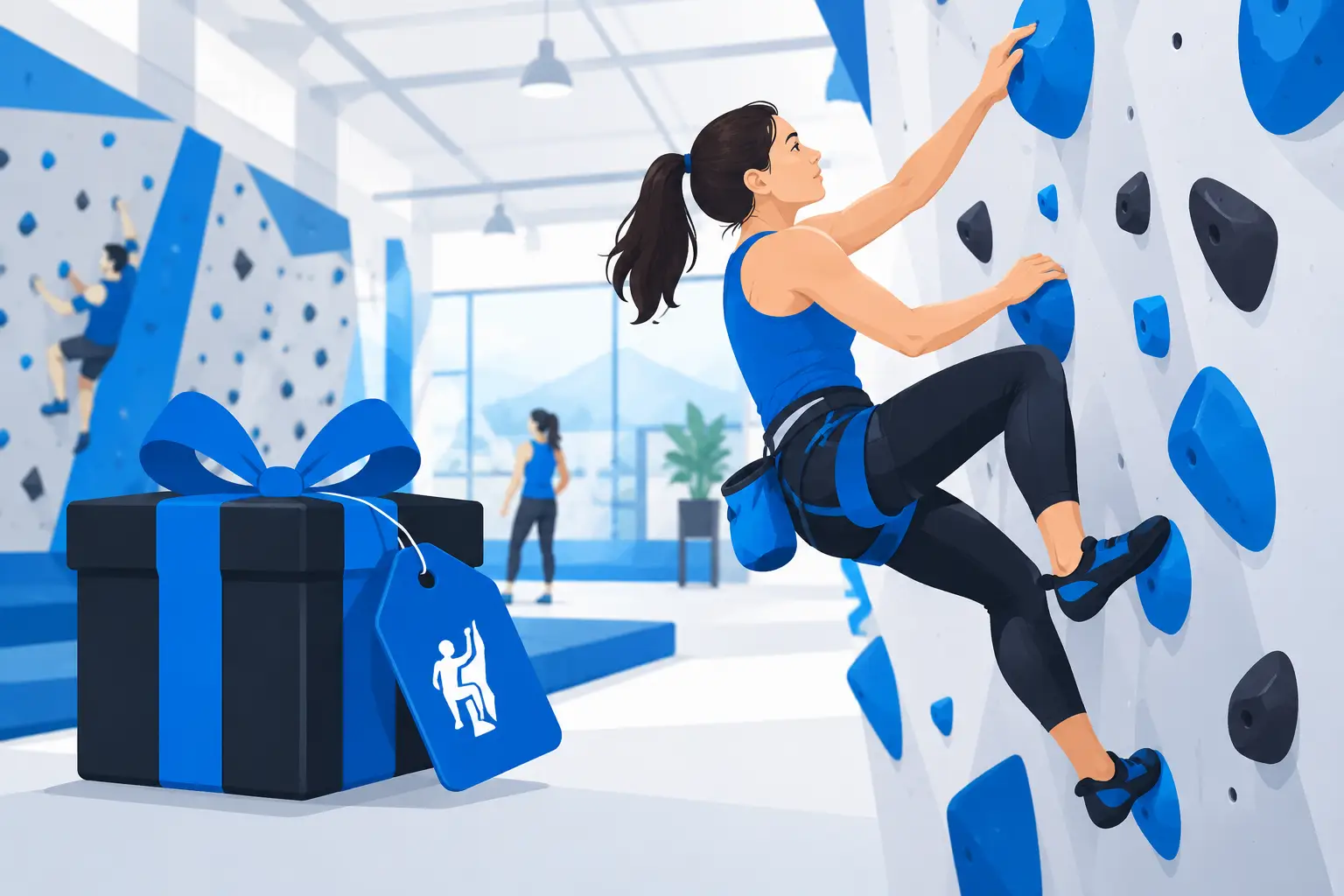
Sell a "Learn to Climb" gift package that includes an intro session, rental gear, and a return pass. Give it a printed card at the desk and a digital version for online buyers. Avoid selling a generic dollar amount unless your existing gift card sales are already strong. A defined experience is easier to buy because the purchaser knows exactly what they are giving.
Set an expiration date that gives the recipient enough time to use it, such as 90 days. Then create a follow-up process for unredeemed packages. A short reminder at 30 days and 60 days can recover revenue that would otherwise sit unused.
5. Reward referrals without turning the gym into a coupon desk
Your most reliable source of new members is often the climber who already likes being there. Black Friday is a useful moment to give current members a reason to bring someone new.
Offer a referral credit only after the new client completes a clear action, such as purchasing a starter package or joining on a monthly plan. For example, the referring member receives a $25 retail or membership credit after the new member's second paid month. The new climber gets their first intro session included.
This protects you from handing out credits for names that never visit. It also keeps the incentive tied to retention, not just lead volume. A karate school using this approach should not reward a parent for submitting a phone number. The reward should come after the new student attends and pays. The same rule applies at a climbing gym.
6. Turn unused class capacity into a Black Friday cohort
If your gym runs youth climbing teams, adult technique clinics, or beginner courses, package the next scheduled group as a Black Friday cohort. Give it a start date, a defined number of spots, and a reason to enroll before the weekend ends.
Say you have a six-week adult bouldering fundamentals course starting January 8 with 16 places. A strong offer is not "20% off classes." It is "Enroll by Monday and receive rental shoes for the full six-week course." You preserve the program price while removing a practical barrier for a new climber.
This also gives your staff a clean enrollment list before January, when many gyms waste hours sorting through incomplete forms, unanswered texts, and people who say they will decide after the holidays.
Keep the Offer Simple Enough to Run
A Black Friday offer only works if your staff can explain it in 20 seconds. One offer for new clients and one offer for current members is usually enough. Five overlapping discounts create mistakes at the desk and make your normal pricing look negotiable.
Build the campaign around one deadline. If the offer ends Sunday night, use Friday for the announcement, Saturday for proof and reminders, and Sunday for the final call. On Monday, follow up with everyone who started registration but did not finish. A short text asking whether they want help choosing a beginner session can recover more enrollments than another discount.
Your registration page should answer four questions before someone has to call: what is included, who it is for, when they can start, and what it costs after the introductory period. If those details are buried, your team will spend the weekend answering preventable questions.
Measure What Happens After the Sale
Do not judge the campaign by purchases alone. Track how many Black Friday buyers attend their first visit, return a second time, finish their course, and convert to recurring membership. Review those numbers at 30, 60, and 90 days.
For instance, 30 starter-package sales sound good. But if only 18 attend a second visit and six become members, the next campaign needs a stronger onboarding sequence, not a bigger discount. A welcome text after the first session, a clear booking link for the next visit, and a staff check-in can change that result.
The best offer is the one your gym can deliver well after the sale ends. Give new climbers a clear first win, a reason to return next week, and a simple path into membership. That is how a Black Friday promotion becomes January revenue instead of a crowded weekend and a list of expired passes.
Want more members who stay? Book a 15 minute call with Nils Digital.